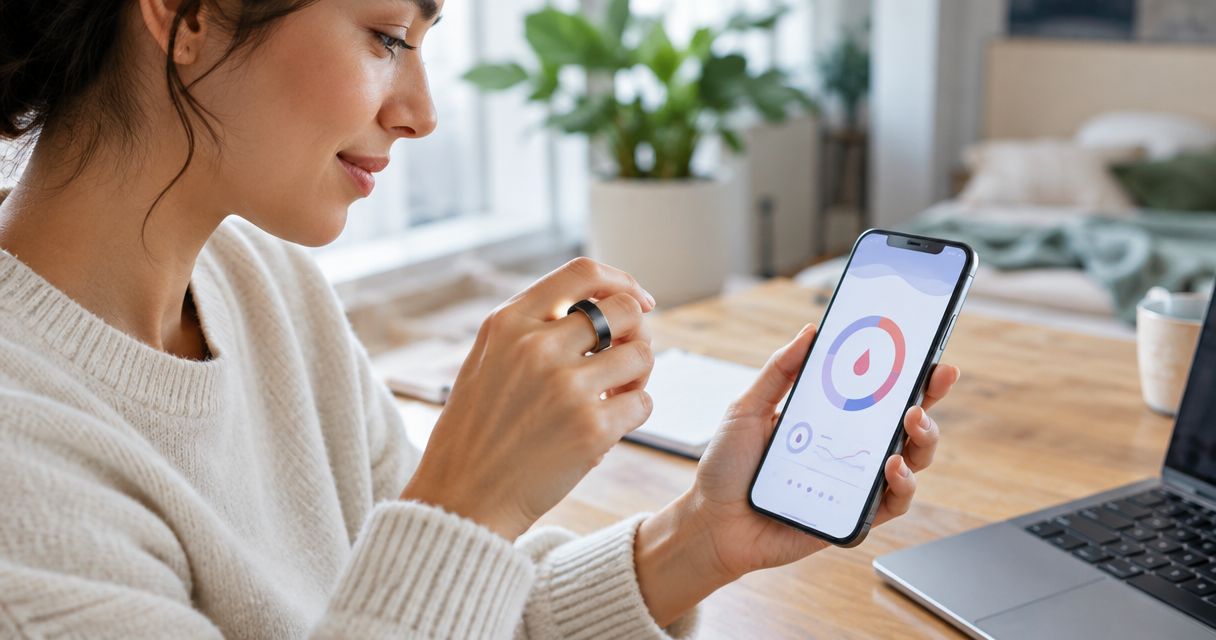

Yes—a smart ring can estimate physiological stress from signals such as heart rate and heart rate variability when the device supports those measurements, but it cannot directly measure your feelings or identify their cause. In 2026, treat a ring’s stress score as a prompt to check your sleep, activity, and symptoms—not as a diagnosis of anxiety or proof that something is wrong.
- Can a smart ring detect stress? It can estimate physiological strain, not read emotions or diagnose anxiety.
- Heart rate variability needs personal context; exercise, sleep, and illness also affect readings.
- Actxa Core Smart Ring supports sleep, activity, and recovery insights; its supplied description does not establish dedicated stress scoring.
- Use recurring patterns alongside how you feel, rather than treating an isolated score as a medical result.
Can a smart ring detect stress levels?
A smart ring can detect signals associated with physiological stress; it cannot establish why those signals changed. A stressful meeting, a hard workout, and an illness can produce overlapping changes in your body. The device needs context that its sensors cannot supply on their own.
The distinction matters when you compare smart rings for sleep tracking. Sleep and recovery information can help explain a difficult day, but neither automatically confirms emotional stress.
| Information | What it can tell you | What it cannot establish |
|---|---|---|
| Heart rate | How quickly your heart is beating during a measurement | Whether a change comes from worry, movement, illness, or another cause |
| Heart rate variability | How the intervals between successive heartbeats vary | A universal stress threshold that applies to everyone |
| Sleep information | Recorded sleep patterns that provide recovery context | The cause of poor sleep or a diagnosis of a sleep disorder |
| A calculated stress score | How a device interprets its available measurements | Your emotions, a mental health diagnosis, or the cause of symptoms |
Not every ring measures the same signals or presents a stress score. Check the exact model’s documented features before treating “wellness tracking” as a promise of stress detection.
Why this matters
A stress label can sound more definite than the underlying measurement. Your ring records physical signals, while the app interprets those signals through its own calculation. Neither step gives the device direct access to your thoughts.
For a 2026 purchase, separate the measurement from the label. Ask what the device records, what the score means, and what action you would take after seeing it. A feature is useful only when you understand its limits.
Use the ring to investigate patterns, not to overrule your experience. Feeling distressed deserves attention even when the app reports a calm day. Equally, an elevated score does not prove that you have an anxiety disorder.
What heart rate and HRV actually mean
Heart rate counts heartbeats, usually expressed as beats per minute. A minute contains 60 seconds, but the intervals between individual beats are not perfectly identical. Heart rate variability, or HRV, describes variation in those intervals and is commonly reported in milliseconds; 1 millisecond is one-thousandth of a second.
The autonomic nervous system helps regulate heart activity as your body responds to demands and recovery. HRV therefore provides information about physiological regulation, but it is not a direct measurement of how worried, calm, or overwhelmed you feel.
A lower HRV reading relative to your usual pattern can accompany strain. However, interpreting that reading requires attention to the measurement method, timing, and circumstances. A value recorded during sleep is not automatically comparable with a value recorded while moving around.
Your baseline matters more than someone else’s score
Compare your measurements with your own usual readings under similar conditions. Comparing your HRV with a friend’s number ignores differences between people and potentially between devices.
Do not treat a higher value as an instruction to train harder or a lower value as an instruction to cancel your day. Look at the surrounding pattern and your symptoms. The number is one piece of information, not a decision by itself.
A stress score is an interpretation
A stress score combines measurements according to the device’s method. Without an explanation of that method, the label alone does not tell you which signals drove the result.
Before using a stress feature in 2026, check whether the app distinguishes measured data from calculated scores. Also check how it handles missing readings and movement. A polished chart does not answer those questions.
Why smart ring stress readings vary
Your body responds to more than emotional pressure. These factors explain why a stress estimate needs context:
- Physical activity: Exercise changes cardiovascular signals. A reading after exertion does not isolate psychological stress.
- Sleep: Disrupted sleep can affect recovery and autonomic activity. Interpret the following day alongside your sleep pattern.
- Illness: Being unwell can change heart rate and HRV. A stress label cannot identify the illness or replace assessment.
- Alcohol and stimulants: These can influence cardiovascular measurements and sleep. Record relevant use when comparing unusual readings.
- Measurement conditions: Movement, sensor contact, and differences in recording conditions affect interpretation. Compare like with like.
These factors are reasons to add context, not reasons to dismiss the device entirely. Repeated observations under comparable conditions are more informative than an isolated result with no explanation.
If a pattern changes while you also feel unwell, focus on the symptoms rather than trying to decode the app’s label. A wearable cannot determine whether a change is harmless or requires treatment.
How to use a smart ring for stress awareness
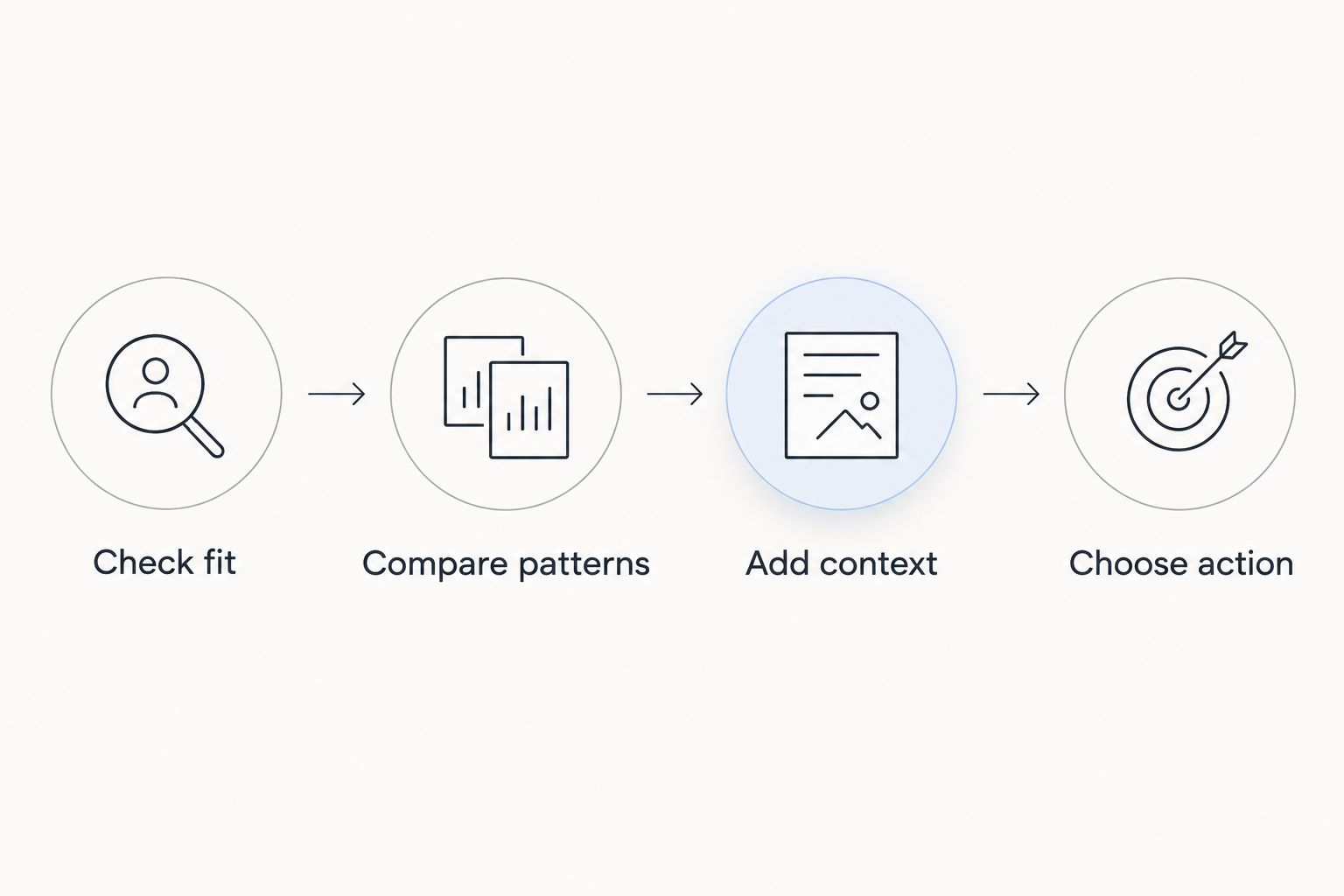
The useful process is simple: check the recording, compare it fairly, add context, then choose an appropriate response. You do not need to turn every fluctuation into a project.
- Check fit. Follow the manufacturer’s sizing and wearing instructions. A loose or uncomfortable ring is not a sound starting point for consistent use.
- Compare patterns. Review your usual readings under similar conditions instead of comparing yourself with another person.
- Add context. Note sleep disruption, exercise, illness, alcohol, and how you actually felt around an unusual reading.
- Choose action. Use ordinary recovery habits when appropriate, and seek clinical advice for persistent or concerning symptoms.
For fit guidance, start with how to measure your smart ring size at home. Follow the instructions for the specific model rather than assuming that an ordinary jewelry size transfers directly.
As a practical routine, write 1 short note per day about sleep, activity, and how you felt. This is a suggested logging habit, not a validated diagnostic protocol. Its purpose is to preserve context that you might otherwise forget.
Keep the routine proportionate. If checking the app repeatedly makes you more anxious, reduce unnecessary checking and discuss that reaction with a healthcare professional. More attention to a score is not automatically better stress management.
Which wearable makes sense for this goal?
Choose the device format you can wear consistently, then verify the measurements you need. Buying a ring simply because its category is associated with stress tracking leaves the most important question unanswered: what does this model actually provide?
Actxa Core Smart Ring is best for health-conscious consumers seeking sleep, activity, and recovery insights in a ring. That is the supported use described for the product, not a claim that it diagnoses stress.
| Product | Best for | Supported benefit | Limitation for this question |
|---|---|---|---|
| Core Smart Ring | People who prefer a ring for sleep, activity, and recovery tracking | Brings those insights to a lightweight wearable | Its supplied description does not confirm a dedicated stress score or specific HRV feature |
| Spark Band | People who prefer a screenless wrist-worn format | Supports daily activity, sleep, and recovery awareness | Its supplied description does not establish dedicated stress scoring |
Actxa offers both wearable formats, so the decision starts with ring versus wrist preference. Neither product description supplied here supports promising emotional stress detection, anxiety screening, or a particular stress-alert function.
For a 2026 shortlist, confirm the current feature details before buying for a specific metric. Do not substitute a general recovery claim for explicit documentation of the measurement you want.


Can a smart ring tell whether I have anxiety?
No—a smart ring cannot diagnose anxiety from a stress score. Anxiety assessment requires more than cardiovascular measurements, including your symptoms, their duration, and their effect on your life. A ring cannot supply that full picture.
You can share wearable trends with a clinician as additional context. Bring a description of what you experienced rather than only a screenshot of an unexplained score.
Can a smart ring tell mental stress from exercise?
Not reliably from a stress label alone. Exercise and emotional pressure can both change cardiovascular signals, so interpretation depends on activity context and the device’s documented capabilities.
If a reading follows a workout, record the workout before deciding that the result reflects worry. If the device provides activity context, review it alongside the stress information rather than in a separate mental category.
Should I worry about one unusual stress reading?
One unusual reading is not a diagnosis. Check whether the measurement conditions changed and whether you have symptoms. A repeated pattern is a reason to investigate context, not proof of a particular condition.
Do not wait for a wearable to confirm concerning symptoms. Chest pain, fainting, or severe shortness of breath require prompt medical attention regardless of what the app displays.
What to check before buying in 2026
A useful buying decision starts with documentation, not a feature name. Check these points before choosing a ring specifically for stress awareness:
- Recorded measurements: Find out which signals the exact model measures rather than assuming all rings include HRV.
- Score explanation: Look for a clear account of what the stress or recovery label represents.
- Measurement timing: Establish whether the relevant readings are taken during sleep, during the day, or under particular conditions.
- Data access: Check whether you can review the underlying trends rather than seeing only a summary label.
- Intended use: Separate general wellness information from any specifically documented medical purpose.
For Actxa wearable wellness devices, the supported starting point here is sleep, activity, and recovery awareness. Verify any additional stress-related capability directly in the current model documentation.
FAQ
Can a smart ring detect stress accurately?
A smart ring can estimate physiological stress, but accuracy depends on the device, measurement conditions, and what its score claims to represent. It cannot directly measure emotions or determine the cause of a change.
Does low HRV always mean I am stressed?
No, low HRV does not always mean emotional stress. Exercise, sleep disruption, illness, and other factors can affect HRV, so compare readings with your own usual pattern under similar conditions.
Can a smart ring diagnose anxiety or depression?
No, a smart ring stress score cannot diagnose anxiety or depression. Seek a clinical assessment if symptoms persist or interfere with daily life, regardless of your wearable results.
Is a smart ring better than a fitness band for stress tracking?
A smart ring is not automatically better than a fitness band for stress tracking. Compare the exact models’ documented measurements, score explanations, and suitability for consistent wear.
Does Actxa Core Smart Ring have a confirmed stress score?
The supplied Core Smart Ring description confirms sleep, activity, and recovery insights, not a dedicated stress score. Check current model documentation before buying specifically for stress scoring or HRV.
Should I check my stress score throughout the day?
Repeated checking is not necessary to interpret longer-term patterns and does not turn a wellness score into a diagnosis. Use a proportionate routine, and reduce checking if it increases anxiety.
Can a normal stress score rule out a medical problem?
No, a normal stress score cannot rule out a medical problem. Seek care based on your symptoms rather than waiting for a ring to flag them.
One last thing
A calm score does not cancel a difficult day. The most useful entry in your wellness record might be your own account of poor sleep, sustained pressure, or feeling unwell—not the app’s interpretation.
In 2026, make this your rule: use wearable information to ask better questions, not to silence symptoms or outsource judgment. A ring helps most when it adds context to your experience instead of replacing it.