You can swim with a smart ring if the manufacturer explicitly approves your exact model for swimming and you follow its water-use instructions. Water resistance alone does not confirm swim tracking, protection in hot water, suitability for diving, or coverage for water damage.
- Can you swim with a smart ring? Yes, when its manufacturer explicitly permits swimming for that model.
- IEC 60529 water-resistance ratings describe test conditions, not automatic permission for every water activity.
- Check swimming approval, fit, care instructions, and swim-tracking features separately before entering the pool.
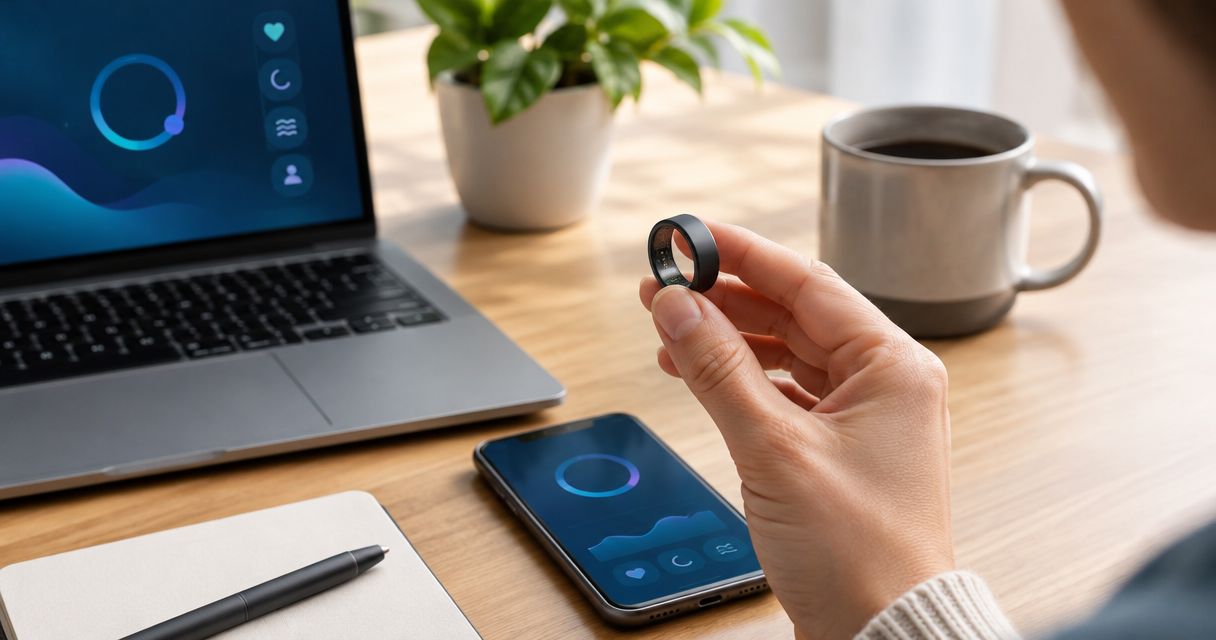
- Actxa Core Smart Ring provides sleep, activity, and recovery insights; verify swimming suitability separately.
Why this matters
A ring that survives water is not necessarily a ring that records your swim. Treat water protection and workout tracking as separate buying decisions. Otherwise, you risk choosing a device that tolerates the pool but does not capture the information you want.
For your 2026 buying checklist, start with the exact model’s instructions rather than a retailer’s shorthand. If you are browsing Actxa wellness wearables, apply the same rule: confirm the intended water activity before treating any device as swimming equipment.
Can you swim with a smart ring?
Yes—when the manufacturer’s instructions specifically permit swimming. A statement such as water-resistant, splash-resistant, or suitable for everyday wear is not a substitute for that permission.
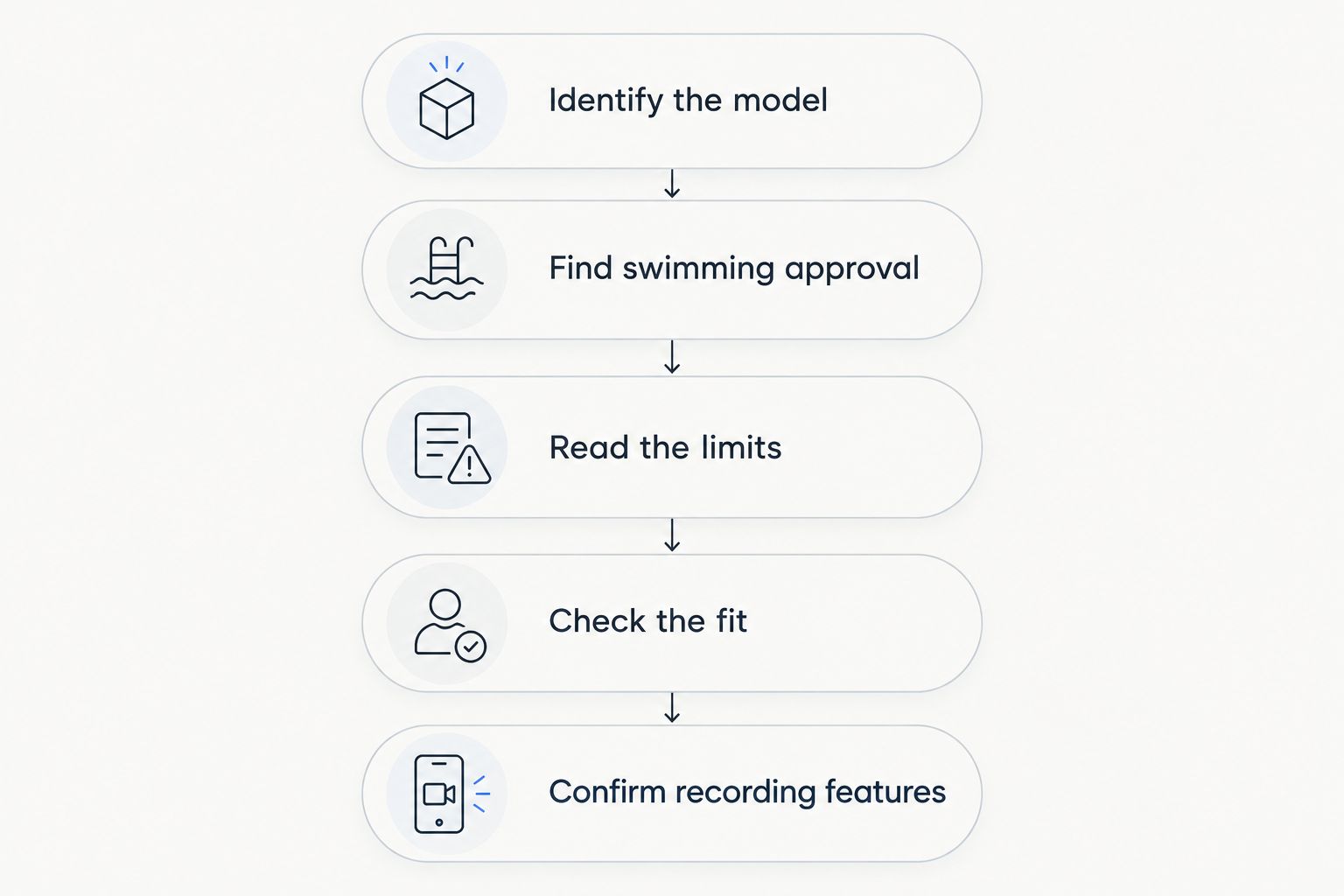
Use this sequence before taking a smart ring into a pool:
- Identify the model. Match the instructions to the ring you own, including its generation. Do not transfer a specification from a similarly named product.
- Find swimming approval. Look for explicit guidance about pool swimming, open water, and any excluded activities. A rating without usage guidance leaves an important question unanswered.
- Read the limits. Check restrictions involving depth, temperature, exposure duration, diving, and cleaning. Follow the manufacturer’s wording rather than interpreting a depth figure as permission.
- Check the ring. Inspect it for cracks, separation, swelling, or other visible damage. Do not take a damaged electronic wearable into the water.
- Check the fit. A ring that slides over your knuckle easily is a loss risk during swimming. Do not rely on normal dry-hand comfort alone.
- Confirm recording features. If you want laps, distance, stroke identification, or underwater heart rate, verify each feature independently.
If you cannot confirm swimming approval, take the ring off before swimming. This is a decision rule, not a judgment about every smart ring’s construction.
IPX7: temporary immersion, not swimming approval
Under IEC 60529, IPX7 describes protection against temporary immersion under specified test conditions, commonly summarized as 1 meter of water for 30 minutes. That test does not itself establish suitability for swimming, repeated pool use, or hot water.
The advantage is a defined immersion test rather than an undefined marketing phrase. The limitation is equally important: temporary immersion and active swimming are different use cases. Buy for the activity the manufacturer permits, not merely the test a device has passed.
IPX8: read the manufacturer’s immersion conditions
IPX8 addresses continuous immersion under conditions specified by the manufacturer and more severe than those for IPX7. It does not have a single universal depth-and-time limit that applies to every product.
An IP68 marking includes a dust-protection rating and an IPX8 water-protection rating; the letters and digits do not independently promise swimming features. In 2026, treat any IP68 claim as a prompt to read the model’s stated conditions—not as the end of your research.
5 ATM: a pressure rating, not a diving allowance
A 5 ATM marking is commonly expressed as 50 meters of water resistance. That figure describes a pressure classification; it is not permission to dive to that depth or expose the ring to every activity below it.
Check the manufacturer’s activity guidance alongside the marking. Swimming permission, diving restrictions, hot-water exclusions, and care instructions answer different questions from the pressure figure itself.
What do the common water-resistance descriptions tell you?
| Description | What it establishes | Best for | Limitation |
|---|---|---|---|
| Splash-resistant | Only the protection specifically stated by the manufacturer | Incidental splashes within stated limits | Does not establish immersion or swimming approval |
| IPX7 | Temporary immersion under specified IEC 60529 test conditions | Understanding a defined temporary-immersion claim | Does not independently approve swimming |
| IPX8 or IP68 | Immersion protection under manufacturer-specified conditions | Comparing devices with clearly published immersion limits | Conditions differ between products |
| 5 ATM | A pressure classification commonly expressed as 50 meters | Evaluating water resistance alongside activity instructions | Does not grant unrestricted depth or diving use |
| Explicit swimming approval | Permission for swimming within the stated restrictions | Deciding whether to wear that model in the pool | Does not confirm lap counting or underwater measurements |
The useful comparison is not simply which marking looks highest. It is which device has clear instructions for the activity you actually plan to do. A strong-looking specification with unclear usage guidance leaves you without a reliable swimming decision.
Why swimming suitability varies
Water exposure is not a single condition. These factors explain why a ring approved for one situation still needs separate guidance for another:
- Approved activity: Pool swimming, open-water swimming, snorkeling, and diving are different activities. Follow the permissions for your exact model.
- Test conditions: A laboratory immersion or pressure test has defined conditions. It does not reproduce every real-world combination of movement, temperature, and exposure.
- Water temperature: Do not extend pool permission to a hot tub, sauna, or steam room. Check temperature restrictions separately.
- Water chemistry: Follow the manufacturer’s instructions for contact with chlorine, salt water, soap, and cleaning products. Swimming approval does not replace aftercare guidance.
- Physical condition: Cracks, impact damage, or a separating casing are reasons to stop using the ring in water. A printed rating does not assess its current condition.
- Fit: Water-use approval does not prevent a loose ring from slipping off. Check security as well as comfort.
For a 2026 comparison, record these factors beside each candidate rather than reducing the decision to a single rating. Clear documentation is useful because it tells you both what is allowed and where to stop.
Will a smart ring count your swimming laps?
Swimming approval does not confirm lap counting. A ring needs an explicitly supported swimming feature to record swimming-specific metrics; general activity tracking is not evidence that it measures pool lengths.
Before buying for training, identify the result you need. A record that you were active is different from a structured swim workout with distance, intervals, and stroke information. Ask for the feature by name rather than accepting a general fitness-tracking claim.
Use this feature checklist:
- Does the exact model offer a swimming workout mode?
- Does that mode record the measurements you need?
- Does recording start manually or automatically?
- Does the manufacturer describe any pool-setting requirements?
- Are the measurements recorded during swimming or calculated afterward?
- What limitations does the manufacturer disclose?
Do not infer an underwater feature from a feature available on land. A device’s ability to report heart rate during everyday wear does not establish that it measures heart rate reliably during a swim.
How should a smart ring fit before swimming?
A smart ring should remain secure without causing pain, numbness, or restricted circulation. If it slides off readily, leave it out of the pool rather than trying to solve the problem while swimming.
Fit deserves its own check because your hands do not stay identical throughout the day. Temperature and activity affect finger size, so one quick try-on is not a complete assessment. Follow the manufacturer’s sizing guidance and use its intended sizing method.
The guide to measuring your smart ring size at home covers the sizing decision separately from water resistance. A comfortable fit and permission to swim are both necessary checks; neither replaces the other.
Avoid improvising with tape, glue, or an accessory the manufacturer has not approved. Such additions are not evidence of safe retention or correct sensor contact. If the fit is wrong, address the sizing issue before taking the ring into water.
What should you do before and after a swim?
Build a simple routine around the manufacturer’s instructions. Do not create a universal cleaning recipe for every ring: materials, coatings, and charging arrangements differ.
Before entering the water
Check the ring for visible damage and confirm that it still fits securely. If your device has a swimming mode, follow its instructions for starting the session before you enter the water.
Remove the ring if pool rules prohibit jewelry or the activity involves an entanglement risk. Device water resistance does not override facility rules, coaching requirements, or activity safety.
After leaving the water
Follow the prescribed cleaning and drying instructions, including any guidance specific to chlorine or salt water. Avoid abrasive cleaners and do not assume soap or disinfectant is suitable for the ring.
Dry the ring and charging contact surfaces before charging, following the device’s instructions. If you notice unusual heat, swelling, a separating casing, or other damage, stop wearing and charging it and contact the manufacturer.
Before the next session
Review whether the ring stayed secure and whether the recorded information matched the feature you expected. If your goal was swim training and the device only logged general activity, reassess the feature match rather than interpreting missing metrics as a sizing problem.
Where does Actxa Core Smart Ring fit?
Actxa Core Smart Ring is best for people seeking sleep, activity, and recovery insights. Those are its stated tracking areas; swimming suitability and swimming-specific measurements require a separate check of the exact model’s instructions.
That distinction gives you a useful benefit-and-limitation assessment. The product addresses everyday wellness trends, but a description of those trends does not establish lap counting, underwater heart-rate performance, or permission for a particular water activity.
For your 2026 shortlist, choose around the information you want to review after exercise. If pool training is the deciding use case, make swimming permission and the required swim metrics pass-or-fail criteria before considering the rest of the feature list.
Does swimming approval include hot tubs or scuba diving?
Swimming approval does not automatically include hot tubs or scuba diving. Hot water and diving introduce conditions that require their own manufacturer guidance; do not treat pool permission as a general water-use guarantee.
This also applies when the ring carries an impressive depth figure. A pressure marking is not a substitute for explicit instructions about the activity, equipment, and conditions involved.
Is a waterproof ring guaranteed against water damage?
A water-resistance claim does not, by itself, establish warranty coverage for water damage. The written warranty determines coverage, exclusions, and the process for making a claim.
Read that policy before relying on the ring for regular swimming. Keep the usage instructions and warranty terms separate in your decision: one describes permitted use, while the other describes the manufacturer’s obligations.
FAQ
Can you swim with a smart ring in a pool?
You can swim with a smart ring in a pool when its manufacturer explicitly permits pool swimming for that exact model. Follow its restrictions and care instructions, and check fit before entering the water.
Is an IP68 smart ring safe for swimming?
An IP68 marking alone does not establish swimming approval. Read the manufacturer’s immersion conditions and confirm that swimming is an expressly permitted activity.
Does 5 ATM mean I can dive to 50 meters?
A 5 ATM marking does not give permission to dive to 50 meters. It is a pressure classification, and the manufacturer’s activity guidance determines the permitted use.
Will a smart ring automatically track swimming laps?
A smart ring records swimming laps only if its supported features explicitly include that measurement. Water resistance and general activity tracking do not establish lap-counting capability.
Can I wear my smart ring in a hot tub?
Wear a smart ring in a hot tub only if the manufacturer explicitly permits that use. Approval for pool swimming does not establish suitability for hot water.
Should I charge my smart ring immediately after swimming?
Dry the ring and its charging contact surfaces before charging, following the manufacturer’s instructions. Do not charge a ring that shows damage, swelling, or unusual heat.
Can I swim with Actxa Core Smart Ring?
Confirm swimming permission in the current instructions for your exact Core Smart Ring before wearing it in water. Its stated sleep, activity, and recovery features do not independently establish swimming approval.
One last thing
Write two separate questions on your 2026 shopping checklist: Can it go in the pool, and will it record my swim? A yes to the first does not answer the second. Separating them is the simplest way to avoid buying a wellness wearable for a swimming feature you never verified.