Getting your smart ring size wrong means returns, re-shipping, and days without tracking data — this guide walks through how to measure smart ring size at home using a string, a ruler, and 10 minutes, no jeweler required.
- Measure finger circumference with string or a paper strip, not a stretchy tape, for the most accurate smart ring size in 2026.
- The Actxa Ring Sizing Kit removes guesswork before you order the Core Smart Ring — try it on, then buy.
- Measure at room temperature, mid-afternoon, on the exact finger you'll wear the ring on.
- If you land between two sizes, size up — a smart ring needs skin contact for its sensors, but not a tourniquet fit.
Why sizing accuracy matters more with a smart ring
A regular ring can sit loose and still look fine on your hand. A smart ring can't. The Core Smart Ring from Actxa Shop relies on sensors pressed flush against skin to read heart rate, SpO2, and temperature — a ring that's even a half-size off throws readings out or slides around your knuckle all day.
Too tight and you cut circulation, which skews pulse data and gets uncomfortable within an hour. Too loose and the sensor loses contact every time your hand moves. Getting the measurement right the first time in 2026 saves you a size-exchange cycle that can take a week or more depending on shipping.
What you'll need
- A piece of non-stretchy string, dental floss, or a thin paper strip (about 6 inches)
- A ruler or tape measure with millimeter markings
- A pen to mark the string
- An existing ring that already fits, if you have one, for cross-checking
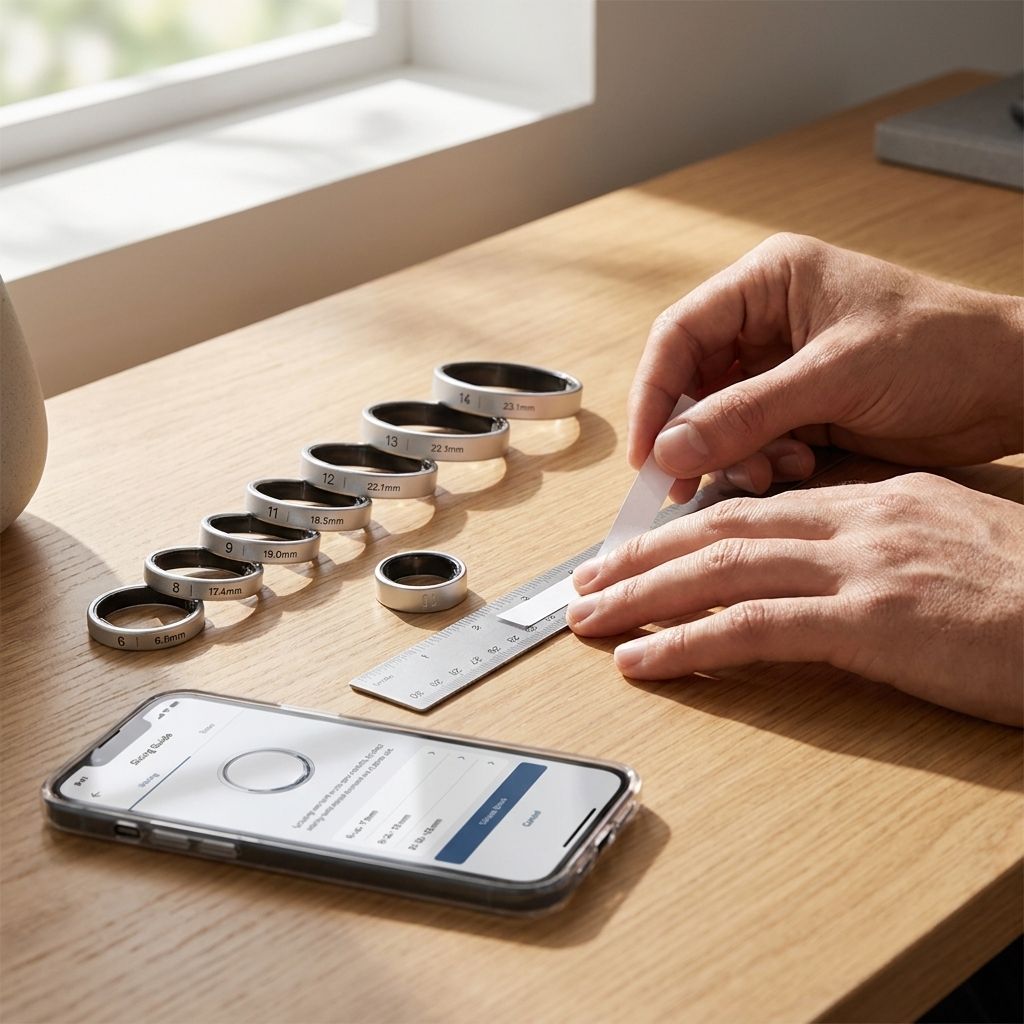
- The Actxa Ring Sizing Kit — a physical set of sizing rings that mirror the actual dimensions of the Core Smart Ring, sold for $10 and built specifically to remove guesswork before you commit to a size
Skip stretchy tape measures. They give inconsistent circumference readings because tension varies with how hard you pull, and that's the single biggest reason people order a smart ring in the wrong size.
The steps
1. Pick the right time of day
Measure your finger in the mid-afternoon, at normal room temperature. Fingers swell in heat and after exercise, and they shrink in cold weather or first thing in the morning. A measurement taken right after a workout or a hot shower will run large and lead you to order a ring that's loose the rest of the day.
Common mistake: measuring right after waking up, when fingers run smaller than their daily average.
2. Wrap the string around the base of your finger
Wrap the string or paper strip snugly around the base of the finger you'll wear the smart ring on — usually the index or middle finger for the Core Smart Ring, since that's where sensor contact reads most reliably. It should sit flush against skin without pinching.
Mark the point where the string overlaps with a pen. This gives you a raw circumference measurement, which is the number every ring size chart is built from.
Common mistake: wrapping over a knuckle instead of the base of the finger, which inflates the measurement by 2-3mm.
3. Lay the string flat and measure in millimeters
Lay the marked string flat against your ruler and read the distance from the start to the pen mark. Record it in millimeters, not inches — nearly every sizing chart, including the one used for Actxa devices, is built in millimeter circumference, so working in mm avoids a rounding conversion error later.
This number is your finger circumference. It's the base figure that everything else in this process converts from.
Common mistake: rounding to the nearest half-centimeter instead of reading the exact millimeter mark, which can shift you a full size.
4. Cross-check against a ring you already own
If you have a ring that already fits the same finger comfortably, measure its inner diameter with a ruler and compare it against your string measurement. The two numbers should be within 1mm of each other. If they're not, remeasure — one of the two readings is off.
This step catches string-measurement errors before you ever place an order, and it takes under a minute.
5. Account for knuckle size versus base width
If your knuckle is noticeably wider than the base of your finger, size for the knuckle, not the base — otherwise the ring won't slide past it. This is common on the dominant hand and on fingers that have been previously injured or arthritic.
A ring that measures perfectly at the base but won't clear the knuckle is a ring you'll never actually wear.
Common mistake: sizing only at the base and discovering at unboxing that the ring won't go on.
6. Confirm with the Actxa Ring Sizing Kit
String measurements get you close, but a physical sizing ring removes the last bit of guesswork. The Actxa Ring Sizing Kit ships a set of trial rings matched to actual Core Smart Ring dimensions — slide each one on, wear it for a few minutes, and confirm it doesn't spin loosely or dig into skin.
This is the step most people skip, and it's the one that actually prevents a wrong-size order.


7. Measure both hands, not just one
Dominant and non-dominant hands often differ by half a size due to muscle development and daily use. Measure the specific finger on the specific hand you plan to wear the ring on — don't assume symmetry.
8. Re-check before you finalize the order
Do a final comparison: string measurement, cross-check ring, and sizing kit result should all agree within a millimeter. If two out of three point to the same size and one is an outlier, trust the majority and go with the sizing kit result as the tiebreaker.
Troubleshooting
The string measurement keeps changing between attempts. Pull tension is inconsistent. Use a rigid paper strip instead of string — it can't stretch, so the reading stays repeatable.
You're stuck between two sizes. Size up. A smart ring loosens slightly over months of wear as the band settles, and a snug-but-not-tight fit keeps sensors in contact without cutting circulation.
The ring fits in the morning but feels tight by evening. Normal daily swelling, especially in warm weather. Measure again in the afternoon and size for that reading, since it reflects your finger at its largest typical state.
It slides past the knuckle but spins freely at the base. You sized for the knuckle when the base was actually the tighter constraint. Recheck step 5 — if the knuckle and base differ by more than 1-2mm, the sizing kit will show you the real compromise size.
You don't have a ruler with millimeter markings. Most tape measures and phone measuring apps default to inches; switch the unit setting or use a printable millimeter ruler before you start, since inch-based readings introduce rounding error at the conversion step.
The Core Smart Ring feels tight only when your hand is cold. Cold causes temporary vasoconstriction that shrinks finger size slightly. This isn't a sizing error — it resolves once your hand warms up.
Tools and resources
- String, dental floss, or a paper strip for the initial measurement
- A millimeter ruler or tape measure
- An existing well-fitting ring for cross-checking
- The Actxa Ring Sizing Kit for a physical trial fit before ordering
- A warm room and a calm 10 minutes — rushed measurements are the most common source of sizing errors
What to do next
Once your size is confirmed with the sizing kit, order the Core Smart Ring in that exact size rather than rounding up for comfort — the sensors need consistent skin contact, and a slightly loose fit undermines heart rate and SpO2 accuracy more than a snug one does. If you're also tracking body composition alongside heart data, pairing the ring with a smart scale gives you a fuller picture without extra manual logging.
FAQ
How do I measure smart ring size without a sizing kit?
Wrap a non-stretchy string or paper strip around the base of your finger, mark the overlap, and measure the length in millimeters against a ruler. This gets you close, but a physical sizing kit still catches knuckle-clearance issues a string can't.
What time of day should I measure my ring size?
Measure in the mid-afternoon at normal room temperature. Fingers run smaller in the morning and in cold weather, and larger after exercise or heat exposure, so afternoon readings reflect your typical daily size.
Should a smart ring fit tighter or looser than a regular ring?
A smart ring should fit snugger than a regular ring because its sensors need constant skin contact to read heart rate and SpO2 accurately. It shouldn't pinch or leave a mark, but it shouldn't spin freely either.
What finger should I wear the Core Smart Ring on?
Most people wear it on the index or middle finger, where sensor contact reads most consistently. Measure the specific finger and hand you plan to wear it on, since sizes vary between hands.
What if my ring size falls between two sizes?
Size up rather than down. A slightly looser fit is more comfortable for all-day wear, and smart ring bands settle slightly over months of use.
Does the Actxa Ring Sizing Kit cost extra on top of the ring?
The Ring Sizing Kit is sold separately for $10.00 and is meant to be used before ordering the Core Smart Ring, so you confirm fit without paying for a return or exchange.
Can I use a printable ring sizer instead of string?
A printable paper sizer can work if printed at exact scale, but printer scaling errors are common and can shift your result by a full size. A physical sizing kit avoids that risk entirely.
Why does my finger measure differently on my left and right hand?
Your dominant hand typically has slightly more muscle and connective tissue, which can add up to half a size. Always measure the exact finger and hand you intend to wear the ring on.
One last thing
The detail most people miss: knuckle width, not base-of-finger width, is what actually determines whether a ring goes on and comes off comfortably day to day. Measure both, and when they disagree by more than a millimeter or two, let the sizing kit — not the string — make the final call before you order the Core Smart Ring.