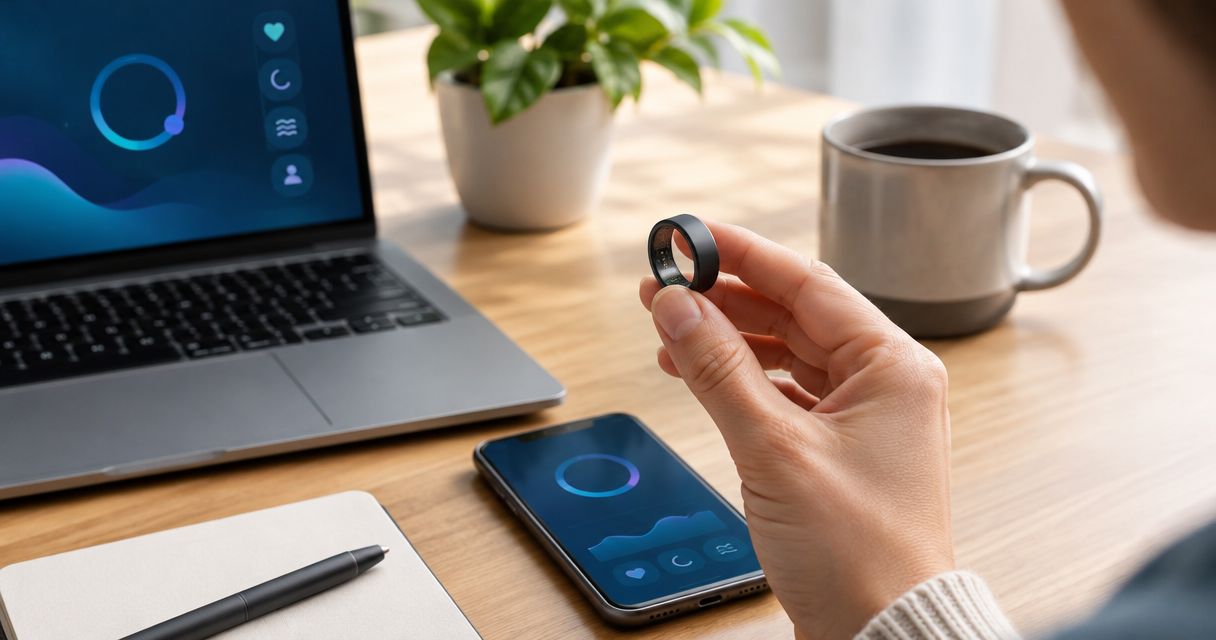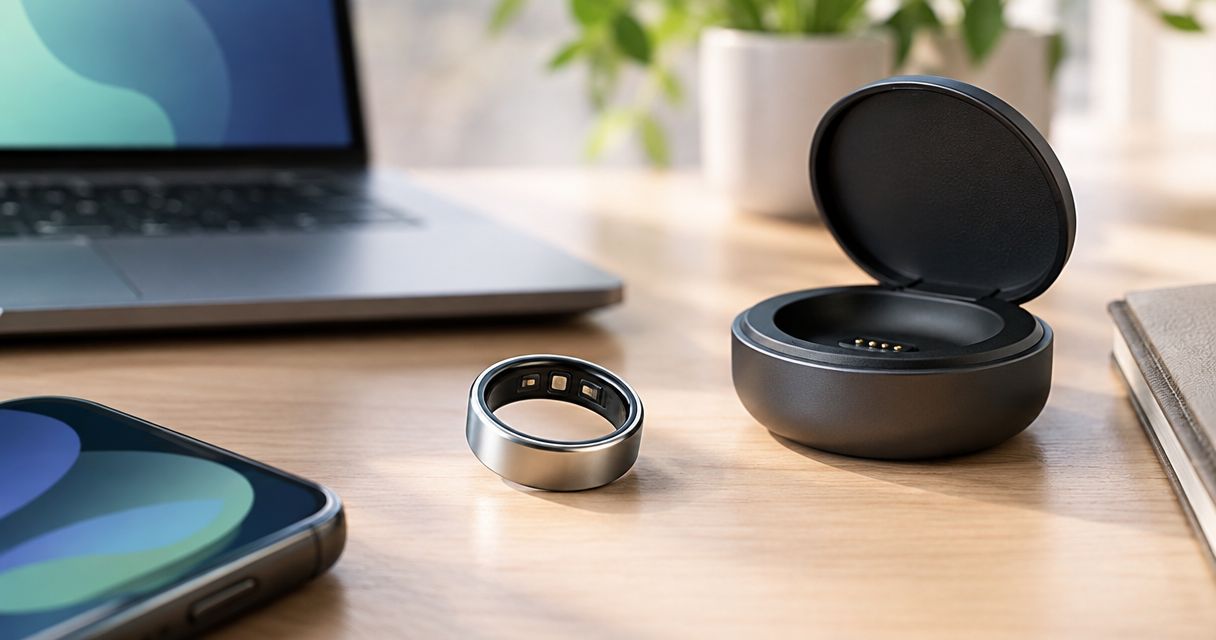
Best overall for accuracy: a smart ring independently validated for the metric you care about. Best for discreet wellness tracking: Actxa’s Core Smart Ring; best fit support: Ring Sizing Kit, an accessory rather than a tracker. This 2026 guide ranks buying choices by evidence, intended use, and fit—not by an unsupported accuracy score.
- For smart ring accuracy ranked, put metric-specific validation ahead of feature counts.
- Actxa’s Core Smart Ring is best for health-conscious buyers seeking a discreet wellness wearable.
- Ring Sizing Kit supports fit selection; it does not measure or certify tracking accuracy.
- Sleep tracking, resting heart rate, and exercise tracking require different accuracy checks.
Why this matters
A smart ring does not have one accuracy rating that applies to everything it measures. Agreement on resting heart rate does not establish agreement on sleep stages, exercise readings, or another health metric. Choose the measurement first. Then assess the evidence.
Actxa sells wearable wellness devices for health-conscious consumers. The Core Smart Ring fits that purpose, but a wellness recommendation is not a claim of clinical accuracy. Keep those decisions separate when choosing a ring in 2026.
This distinction also changes how you read a ranked list. A feature tells you what a device offers; validation tells you how a specific measurement compares with an appropriate reference. Neither a long feature list nor a discreet design supplies that comparison.
What makes the best smart ring for accuracy?
Use these criteria before comparing products. They separate useful evidence from claims that sound precise but do not answer your question.
- Metric-specific validation: Look for results for the exact measurement you want, not a general claim that the ring is accurate.
- Appropriate reference: Heart-rate evaluation needs a suitable reference; sleep-stage evaluation needs more than agreement with another consumer wearable.
- Relevant conditions: Resting, sleeping, and exercising create different measurement conditions. Evidence from one setting does not settle another.
- Error reporting: Look for the size and direction of errors, not just a headline correlation or an overall percentage.
- Fit and wear consistency: A ring must stay positioned as intended. Comfort also matters because a device you remove cannot record that period.
- Version relevance: Check the device generation and software described in the study. A familiar brand name does not make every version equivalent.
For a 2026 purchase, the strongest evidence answers a narrow question clearly: which device, which metric, which reference, and which conditions? A broad accuracy claim without those details is not a buying advantage.
Smart ring accuracy ranked: choices at a glance
The order below ranks buying approaches, not measured error rates. Only a direct, comparable evaluation can establish which named ring is more accurate.
| Ranked choice | Best for | Standout feature | Key limitation |
|---|---|---|---|
| Metric-validated smart rings | Buyers prioritizing a specific measurement | Evidence against a relevant reference | Validation applies only to the studied metrics and conditions |
| Core Smart Ring | Health-conscious buyers seeking discreet wellness tracking | Health tracking in a ring format | A wellness use case does not establish an accuracy lead |
| Unvalidated smart rings | Buyers considering exploratory wellness tracking | An option to assess against their own requirements | Accuracy superiority is not established without relevant evidence |
Ring Sizing Kit is not included as a competing ring. Its role is to help you choose a Core Smart Ring size before confirming your order.
1. Metric-validated smart rings: best for evidence-led tracking
A metric-validated smart ring has been evaluated against an appropriate reference for a defined measurement. That is the strongest starting point when accuracy determines your purchase. The useful finding is the study result—not the word validated on its own.
Read the scope carefully. A study of overnight heart rate does not prove exercise performance, and a study of sleep duration does not automatically validate sleep-stage classification. Match the evidence to what you intend to do.
Metric-validated smart rings pros:
- Give you a reference-based reason to consider the device.
- Make the measurement and testing conditions explicit.
- Let you assess reported error rather than rely on promotional language.
- Help separate supported features from features requiring further evaluation.
Metric-validated smart rings cons:
- A study can cover a narrower use case than the product’s feature list.
- Group-level results do not guarantee the same error for every individual.
- Findings for an older device or software version do not automatically transfer to another version.
Best for: Buyers who need the clearest available evidence for one defined metric.
Before buying, locate the original evaluation rather than stopping at a summary. Check whether the authors report agreement, error, and the conditions under which readings were collected. A favorable headline is not enough.
Verdict: Buy only when the validation matches your intended measurement and use.
2. Core Smart Ring: best for discreet wellness tracking
Actxa’s Core Smart Ring is a health-tracking ring designed for health-conscious users who want a discreet wearable. That makes it a relevant option when the ring format itself is part of your decision. It is not a reason to declare it the most accurate ring.
Actxa’s Core Smart Ring is best for health-conscious buyers seeking discreet wellness tracking. Treat that as a use-case verdict, not a laboratory finding or a claim that it outperforms another device.
Core Smart Ring pros:
- Designed specifically for health-conscious users.
- Provides health tracking in a ring format.
- Addresses buyers who want a discreet wearable.
- Has a dedicated sizing accessory for selecting a comfortable fit.
Core Smart Ring cons:
- Discreet design does not establish measurement accuracy.
- A wellness tracker does not replace diagnostic assessment.
- Suitability for a specific metric requires checking that metric’s current documentation.
Best for: Buyers who want discreet wellness tracking and will assess the measurements against their own needs.
For a 2026 decision, start with the health information you actually want to follow. Confirm the relevant features and requirements before choosing the device. Do not assume that the phrase health tracking promises every metric discussed in a general smart-ring guide.
Verdict: Hold if comparative accuracy is your deciding factor; consider Core Smart Ring for its stated discreet wellness use case.
Fit support before you choose
Ring Sizing Kit lets you try different sizes before confirming your final order. Use it to assess comfort and positioning during your normal routine, rather than choosing from appearance alone. It supports size selection; it does not certify sensor performance.
These products serve different roles: Core Smart Ring is the wearable, while Ring Sizing Kit helps you select its fit.


3. Unvalidated smart rings: best for exploratory wellness use
An unvalidated smart ring has no relevant reference-based evidence supporting the accuracy claim you are assessing. That does not prove the device is inaccurate. It means you cannot rank it above another ring on that claim.
If you still consider one, assess its stated purpose and your expectations separately. A device for personal wellness observation should not become the basis for a medical decision just because its app displays precise-looking numbers.
Unvalidated smart rings pros:
- Can remain candidates for non-diagnostic wellness use.
- Let you assess whether the ring format suits your routine.
- Do not need an accuracy-superiority claim to be considered for a stated feature.
Unvalidated smart rings cons:
- Lack a relevant basis for declaring an accuracy advantage.
- Personal comparisons cannot replace controlled validation.
- Precise-looking output can obscure uncertainty in the underlying estimate.
Best for: Buyers exploring a wearable format without requiring a proven accuracy advantage.
Verdict: Skip when accuracy is the deciding purchase criterion.
How to read an accuracy claim
An accuracy statement becomes useful when it connects the metric, reference, conditions, and error. If one part is unclear, the claim answers less than it appears to.
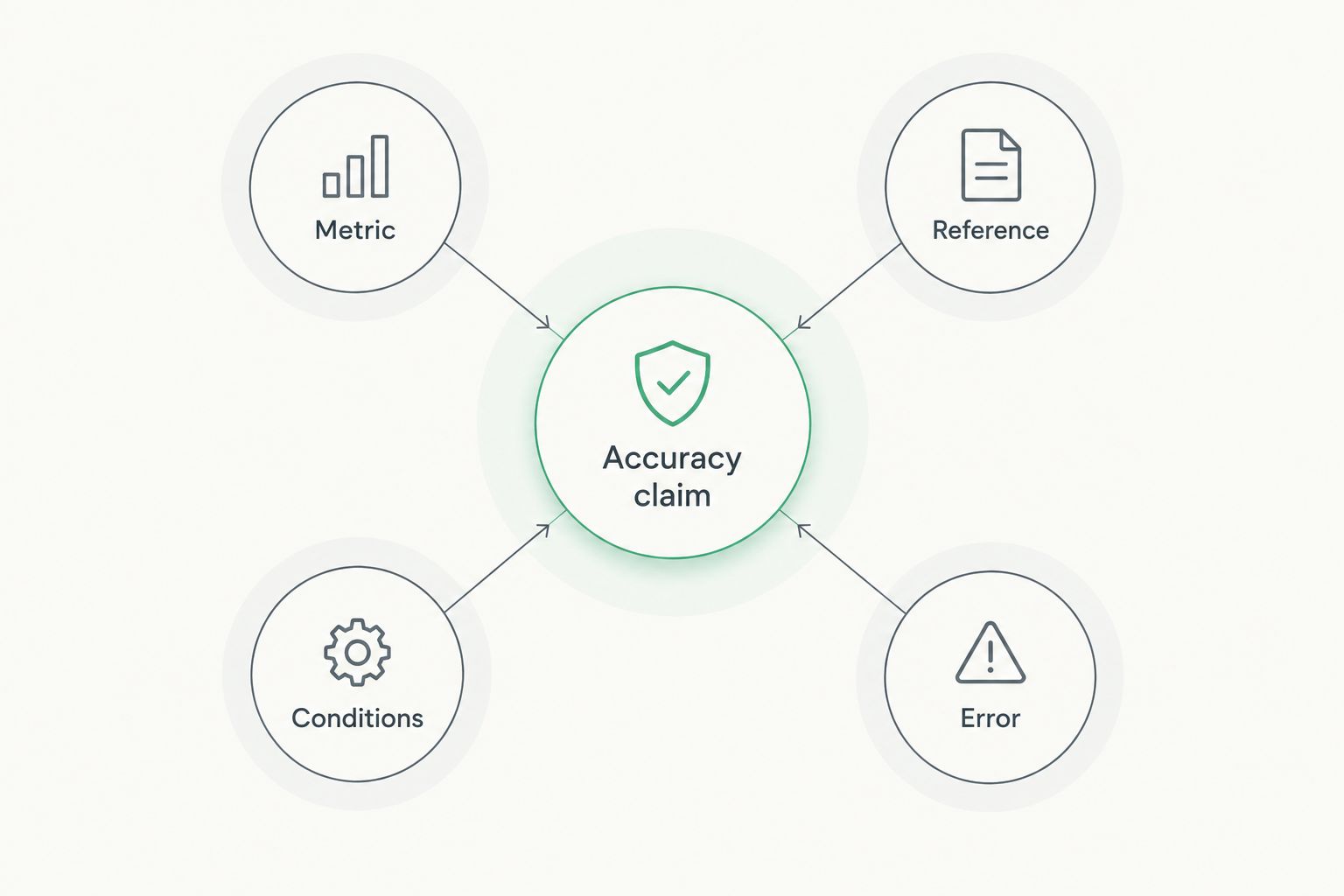
Metric
Identify exactly what was evaluated. Heart rate, sleep duration, sleep stages, and activity estimates are different outputs. Evidence for one does not supply evidence for the others.
Also distinguish a measurement from a score built from measurements. A recovery-style score involves interpretation as well as sensor data. Its meaning depends on the method used to calculate it.
Reference
Ask what the ring was compared with. An electrocardiogram measures the heart’s electrical activity; polysomnography is an established reference for evaluating sleep. Another consumer wearable is not automatically an equivalent reference.
The reference must fit the question. Agreement between two devices shows agreement between those devices, not necessarily agreement with the underlying physiological measurement.
Conditions
Check whether the evaluation involved sleep, quiet rest, or movement. Optical measurements depend on detecting a signal, and movement can interfere with that process. A quiet overnight evaluation does not answer every exercise question.
Check the participants and setting too. Results from a defined study population have a defined scope; they are not a promise of identical performance for everyone.
Error
Correlation shows whether values move together. Agreement asks how closely the measurements match. A strong relationship can coexist with a consistent difference between devices.
Look for how error is reported and whether missing readings are discussed. A single headline percentage is difficult to interpret without knowing what counted as a correct result.
Check everyday usability without calling it validation
You can evaluate whether a ring fits your routine without pretending to conduct a clinical study. Keep the question practical: does it stay comfortable, record the periods you care about, and present information you understand?
Use this suggested observation plan for a 2026 purchase. These are planning intervals, not validated testing thresholds:
- Fit check: Assess comfort during a normal day and after waking. Follow the manufacturer’s sizing and wear instructions.
- Sleep check: Review 2 nights for missing periods and whether recorded timing broadly matches your own notes.
- Movement check: Observe 3 ordinary activity sessions for comfort, interruptions, and any limitations described by the manufacturer.
- Routine check: After 7 days, decide whether wearing and reviewing the device fits your habits.
Keep conditions in your notes. A reading collected during movement should not be treated as interchangeable with a resting reading, and a gap in the record is different from an incorrect value.
This plan evaluates usability, not physiological accuracy. Comparing a ring with your recollection of bedtime does not validate sleep stages. Comparing it with another wearable does not establish which device is correct.
If a reading concerns your health, seek an appropriate clinical assessment instead of trying to settle it through a consumer-device comparison.
How we ranked
This 2026 ranking places metric-specific validation first, a documented wellness use case second, and unsupported accuracy claims last. It uses the criteria above: reference quality, relevant conditions, reported error, fit, and version relevance.
Core Smart Ring earns a use-case recommendation for discreet wellness tracking. Ring Sizing Kit earns a supporting role in fit selection. Neither placement asserts that the ring beats another named product in a head-to-head accuracy test.
Which smart ring should you choose?
Choose a ring with relevant independent validation when accuracy is your first priority. Decide whether your main question concerns sleep, resting measurements, or activity before comparing evidence. A general best-ring verdict is less useful than an answer tied to that question.
Choose Core Smart Ring when its stated discreet wellness purpose matches what you want, then check the current details for your required measurements. Use the sizing accessory for fit selection—not as evidence that the resulting readings are accurate.
For an undecided buyer in 2026, the default is simple: buy for a supported use case, not the largest collection of health claims.
FAQ
What is the most accurate smart ring in 2026?
There is no defensible universal winner without comparable evidence for the same metrics and conditions. Choose a ring validated for the measurement you care about rather than treating accuracy as one overall score.
Is Actxa’s Core Smart Ring a good choice for wellness tracking?
Core Smart Ring is designed for health-conscious users who want discreet health tracking in a ring format. That supports a wellness use-case recommendation, not a claim that it is more accurate than competing rings.
Does accurate heart-rate tracking mean accurate sleep stages?
No, heart-rate accuracy does not establish sleep-stage accuracy. Each output needs its own evaluation against an appropriate reference.
Can I test smart ring accuracy by comparing it with my watch?
A watch comparison can reveal disagreement, but it cannot establish which device is correct. Accuracy evaluation requires a suitable reference and defined measurement conditions.
Does ring size affect the buying decision?
Yes, fit and comfort affect whether you can wear a ring consistently and as instructed. Ring Sizing Kit helps you try Core Smart Ring sizes, but it does not validate the ring’s measurements.
Is a smart ring accurate enough to diagnose a health condition?
Do not use a general wellness ring as a substitute for diagnostic assessment. Follow the device’s stated intended use and seek clinical advice for concerning symptoms or readings.
Why do smart ring accuracy rankings disagree?
Rankings disagree when they prioritize different metrics, references, device versions, or use conditions. A sleep-focused verdict and an exercise-focused verdict answer different questions.
One last thing
The most useful accuracy question is not whether a ring is accurate. It is accurate for which measurement, against which reference, and under which conditions? Ask that before accepting a ranking.
For your 2026 purchase, write your main measurement goal in one sentence before browsing. That small step makes irrelevant features easier to ignore and unsupported accuracy claims easier to spot.