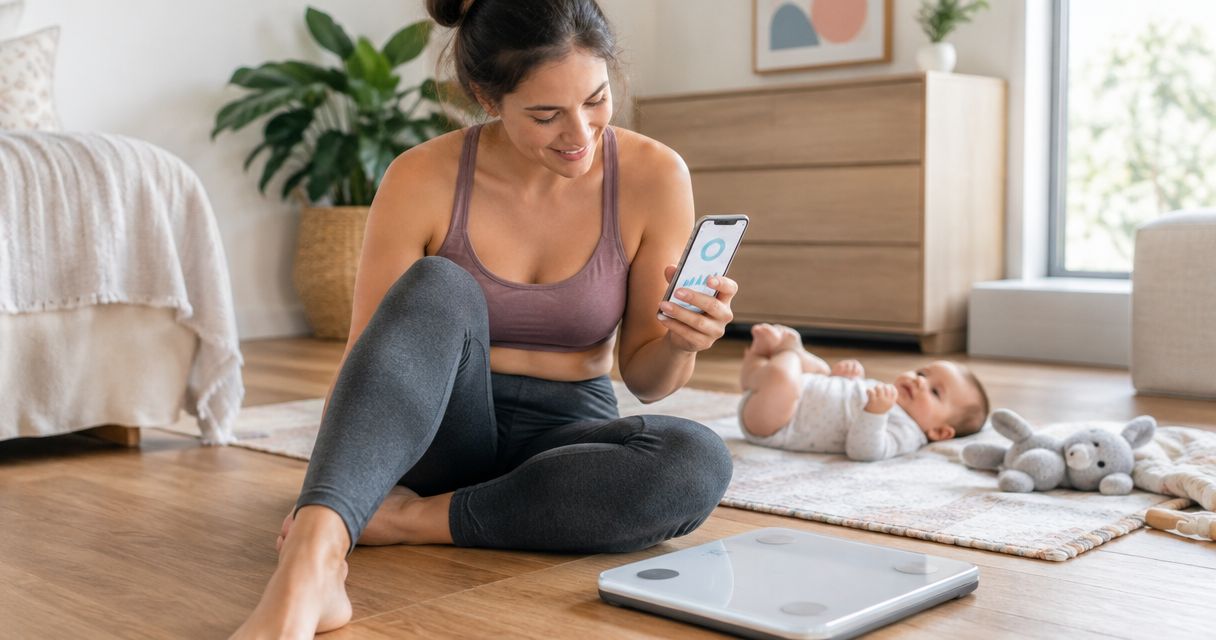
Postpartum smart-scale tracking is the use of connected weight measurements with the aim of supporting recovery conversations, not accelerating weight loss. Choosing a smart scale for postpartum recovery means prioritizing safe use, interpretable trends, and your relationship with weighing over the number of metrics displayed.
- A smart scale for postpartum recovery tracks weight trends; it does not measure healing, milk supply, or readiness for exercise.
- Actxa offers home body-composition tracking through the Sense 2 Smart Scale, not postpartum diagnosis.
- Body-fat estimates depend on hydration and should not drive postpartum food restriction.
- Choose clinician-led monitoring, a basic scale, or a connected scale according to your recovery needs.
Why smart-scale tracking matters for postpartum recovery
Postpartum recovery changes the question you should ask of a scale. Instead of asking whether your weight is falling fast enough, ask whether tracking provides useful information without adding pressure to feeding, sleep, and healing.
In 2026, the distinction remains straightforward: a connected scale records a measurement, while postpartum care assesses your health. Fluid changes after delivery can complicate weight interpretation, and body-composition estimates require more caution than the display suggests.
The Actxa store includes wellness devices for home tracking. Treat that category as a source of personal records, not a substitute for evaluating symptoms or obtaining individualized recovery advice.
The best postpartum tracking plan is the least demanding one that answers a useful health question. If weighing does not answer one, you do not need to add it.
Put recovery ahead of a target weight
Postpartum needs differ from general fitness tracking because recovery, feeding, and changing routines all affect how measurements should be interpreted. A scale cannot tell you whether an incision is healing, whether pelvic-floor symptoms need assessment, or whether you are eating enough for your circumstances.
For a 2026 care plan, the American College of Obstetricians and Gynecologists' guidance, Optimizing Postpartum Care, recommends contact with a maternity care provider within the first 3 weeks postpartum and a comprehensive visit no later than 12 weeks. Those are care milestones, not deadlines for changing your weight.
Use appointments to agree on whether home weighing has a purpose. A clinician-directed plan for a medical concern takes priority over a wellness app's goals, reminders, or interpretation.
How to use a smart scale during postpartum recovery
Set your purpose
Start with a notebook or a simple phone note. Write down the question that weighing is meant to answer before buying equipment or opening an app; this keeps a measurement from becoming an automatic judgment about recovery.
A useful purpose is specific enough to discuss with your clinician. Recording a requested weight trend is different from trying to reach a pre-pregnancy number, and neither should be confused with checking for complications.
If you have a history of disordered eating, compulsive checking, or distress around weight, discuss alternatives before starting. You can ask your care team to manage necessary measurements without making them part of your home routine.
- Write 1 tracking goal in plain language.
- Ask whether weight is relevant to that goal.
- Decide who will interpret the record.
- Identify what would make you stop tracking.
- Keep symptom questions separate from weight goals.
Confirm safe use
Read the device instructions before stepping onto a smart scale. Weight measurement and body-composition estimation are different functions, and safety instructions can differ by device and measurement mode.
Many body-composition scales use bioelectrical impedance analysis, which passes a small electrical signal through the body to estimate composition. If you have a pacemaker or another implanted electronic device, follow the manufacturer's restrictions and obtain medical advice before using that function. Do not assume that a weight-only setting exists or bypasses every restriction.
Breastfeeding does not make a body-fat estimate a measure of nutritional adequacy. Ask your clinician how to interpret home measurements in the context of feeding, hydration, and recovery rather than changing your food intake in response to a score.
- Read the model-specific safety instructions.
- Check restrictions concerning implanted devices.
- Confirm whether different measurement modes exist.
- Ask about any recovery-related mobility limitations.
- Avoid stepping onto a scale when dizzy or unsteady.
Choose your scale
Begin with the equipment you already own. A basic digital scale and a written record can document weight without adding an account, synchronization process, or body-composition dashboard.
A connected scale is the faster recordkeeping route when its supported features match your needs. Automatic logging, where offered, removes a manual step; it does not make the underlying measurement a medical assessment.
The Actxa Sense 2 Smart Scale provides weight and body-composition information, according to its supplied product description. Its postpartum-specific validation, app integrations, and measurement modes are not established here, so check those details before choosing it for a particular care plan.
Actxa is best for shoppers comparing home wellness devices, not for diagnosing postpartum complications. Choose the category because it suits your recordkeeping needs, not because more metrics promise a more complete recovery assessment.
- Keep a basic scale if manual logging is sufficient.
- Check how the selected device stores measurements.
- Confirm phone compatibility before purchase.
- Review account, sharing, and deletion controls.
- Verify the safety instructions for the exact model.
Standardize each measurement
For your 2026 tracking routine, consistency matters more than repeatedly stepping on the scale. Follow the manufacturer's placement instructions and use comparable conditions so that changes in setup do not dominate the record.
Use a stable, level surface and keep the scale in the same location. If the instructions require bare feet for body-composition measurements, follow that requirement without assuming it applies to every function or model.
Do not hold your baby while measuring yourself. That changes the reading and creates an unnecessary balance task, particularly when you are tired, sore, or recovering from surgery. Choose a moment when the baby is safely settled and you can stand comfortably.
- Use the same scale and location.
- Follow the device's surface and foot-placement instructions.
- Keep timing and clothing reasonably consistent.
- Record 1 measurement per planned session.
- Note an unusual circumstance instead of repeatedly rechecking.
Review the pattern
Read a weight record as a sequence, not a verdict on an isolated day. Hydration, food, clothing, and measurement conditions affect readings; a change does not identify its own cause.
Body-composition estimates need an additional layer of caution. Bioelectrical impedance uses electrical measurements and predictive equations rather than directly measuring fat or muscle, so changing hydration can affect the estimate. A falling body-fat display is not proof that a postpartum nutrition plan is appropriate.
Bring the record to the person who can interpret it in context. If monitoring is medically indicated, ask for clear instructions about measurement frequency and which changes require contact; do not substitute a generic app threshold.
- Compare measurements taken under similar conditions.
- Keep weight separate from body-composition estimates.
- Add brief context rather than assigning a cause.
- Follow clinician-specified reporting instructions.
- Never dismiss symptoms because the scale looks unchanged.
Reassess the routine
A routine that helps during one stage of recovery can become unnecessary later. In 2026, your tracking plan should still serve your current question rather than continuing because an app keeps prompting you.
Check whether the record improves a care conversation, saves effort, or simply produces more checking. If weighing causes anxiety, food restriction, or repeated reassurance-seeking, pause the routine and discuss that response with your care team.
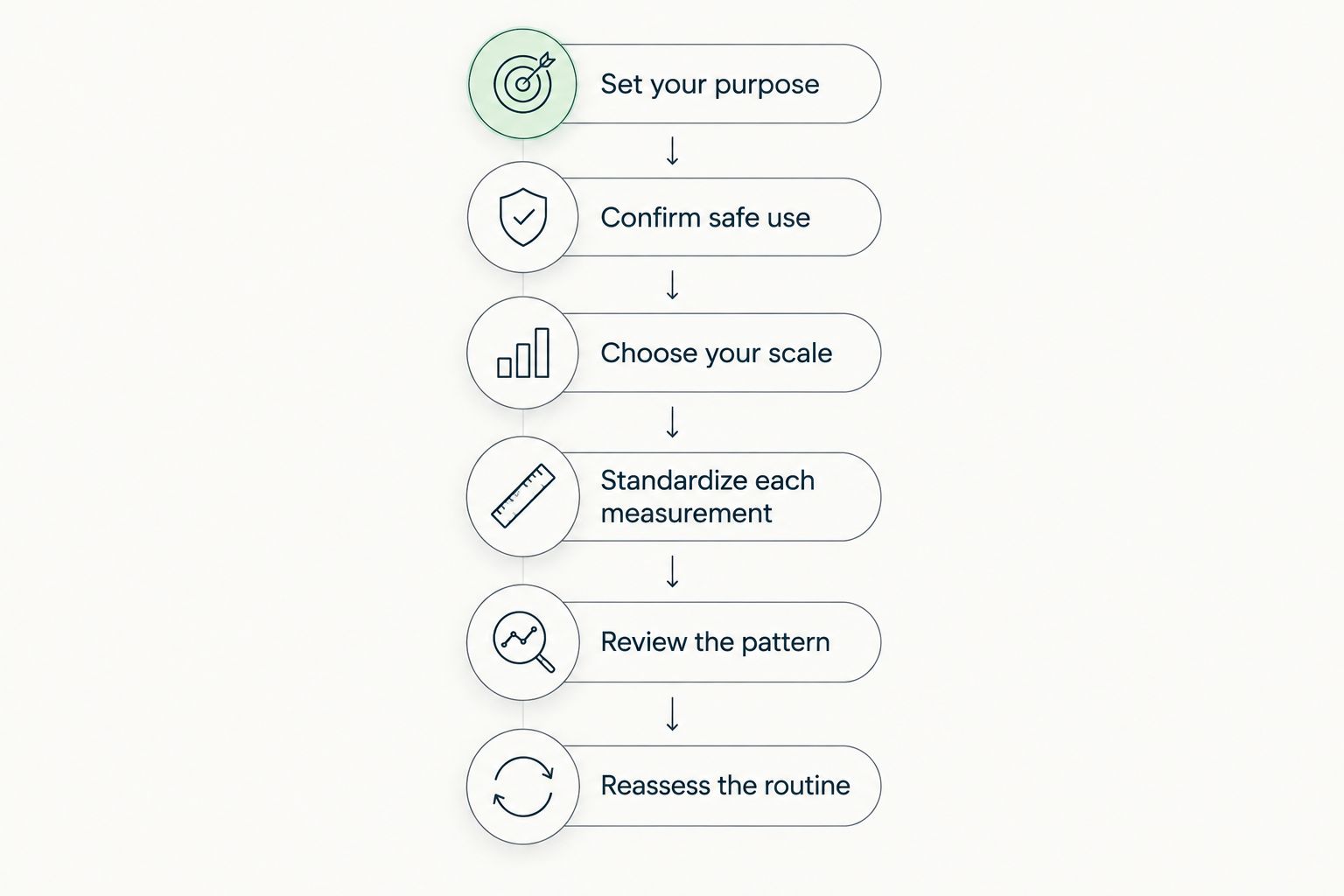
The process is simple: set a purpose, confirm safe use, choose suitable equipment, standardize measurements, review the pattern, and reassess. The final step matters because stopping an unhelpful measurement habit is a valid outcome.
- Keep reminders only when they support your plan.
- Disable weight-loss targets that conflict with care advice.
- Review who can access your measurements.
- Pause tracking if it increases distress.
- Revisit the purpose when your recovery needs change.
Compare postpartum tracking options
For a 2026 purchase decision, compare the job each option performs rather than counting dashboard metrics. The right choice depends on whether you need a personal record, easier logging, body-composition estimates, or clinical interpretation.
| Option | Best for | Main benefit | Key limitation |
|---|---|---|---|
| Basic digital scale with a written log | Occasional weight records | Keeps the process simple | Requires manual recording and offers no clinical interpretation |
| Connected weight scale | People who want less manual logging | Can simplify recordkeeping when automatic logging is supported | Connectivity and account requirements vary by model |
| Actxa Sense 2 Smart Scale | Shoppers seeking weight and body-composition information | Provides information beyond weight | Postpartum-specific validation and individual suitability are not established here |
| Clinician-led monitoring | Medical concerns or individualized reporting needs | Connects measurements with symptoms and clinical context | Requires coordination with your care team |
| No routine home weighing | People without a monitoring need who find weighing distressing | Removes an unhelpful checking task | Does not provide a home weight record if one becomes necessary |
Choose clinical interpretation over additional metrics when the question concerns your health. A body-composition display cannot determine the cause of swelling, assess feeding adequacy, or decide whether exercise is appropriate.
Common mistakes postpartum scale users make
Treating fluid changes as fat changes
A weight change after delivery does not identify which tissue or fluid changed. Do not label every decrease as successful fat loss or every increase as failed recovery; discuss the pattern when interpretation matters.
Turning a body-fat estimate into a food rule
A consumer estimate cannot establish your calorie needs or assess breastfeeding adequacy. Avoid cutting meals or changing feeding-related nutrition because an app assigns a body-composition label.
Setting a return-to-weight deadline
A pre-pregnancy number is not a universal recovery target. Deadlines can pull attention away from symptoms, function, nourishment, and the individualized advice that should guide your care.
Using a normal reading to dismiss symptoms
A normal weight reading does not rule out a postpartum complication. CDC's Hear Her guidance identifies symptoms such as chest pain, trouble breathing, severe headache, and heavy bleeding as urgent maternal warning signs; seek medical care rather than waiting for another measurement.
Comparing your dashboard with someone else's
Different devices, measurement conditions, and individual circumstances make side-by-side comparisons unreliable. Keep the record focused on your own care question rather than another parent's pace of weight change.
FAQ
What's the best smart scale for postpartum recovery?
The best smart scale for postpartum recovery is one that safely supports a clear tracking need without adding distress. A basic scale can be sufficient; a connected model is useful when its recordkeeping features reduce effort.
Can I use a smart scale while breastfeeding?
Check the exact device's instructions and ask your clinician about your circumstances before using body-composition functions. Breastfeeding-related nutrition decisions should not be based on a consumer body-fat estimate.
Are smart-scale body-fat readings accurate after giving birth?
Smart-scale body-fat readings are estimates, not a direct measurement of postpartum fat loss. Hydration changes can affect bioelectrical impedance estimates, so do not use an isolated reading to change your diet or judge recovery.
How often should I weigh myself after delivery?
Use the schedule your clinician recommends when weighing has a medical purpose. Without a specific monitoring need, there is no requirement to make home weighing part of postpartum recovery.
Can a smart scale tell me whether my recovery is normal?
No, a smart scale cannot determine whether postpartum recovery is normal. It does not assess incision healing, pelvic-floor symptoms, mental health, or the cause of new symptoms.
Is a connected scale better than a regular digital scale after pregnancy?
A connected scale is better for reducing manual recordkeeping when it supports automatic logging. A regular digital scale is sufficient when you only need occasional weight measurements and can record them yourself.
Should I stop using a scale if it makes me anxious?
Pause nonessential weighing if it increases anxiety or compulsive checking, and discuss alternatives with your care team. If monitoring is medically necessary, ask for a plan that provides the required information with less distress.
One last thing
Before your next postpartum appointment, write down 2 questions: what decision will this measurement inform, and what should prompt me to contact you? Those answers are more useful than adding another body-composition metric to your dashboard.
Keep the scale only if it earns its place in your recovery routine. A useful record supports care; it does not grade your body.