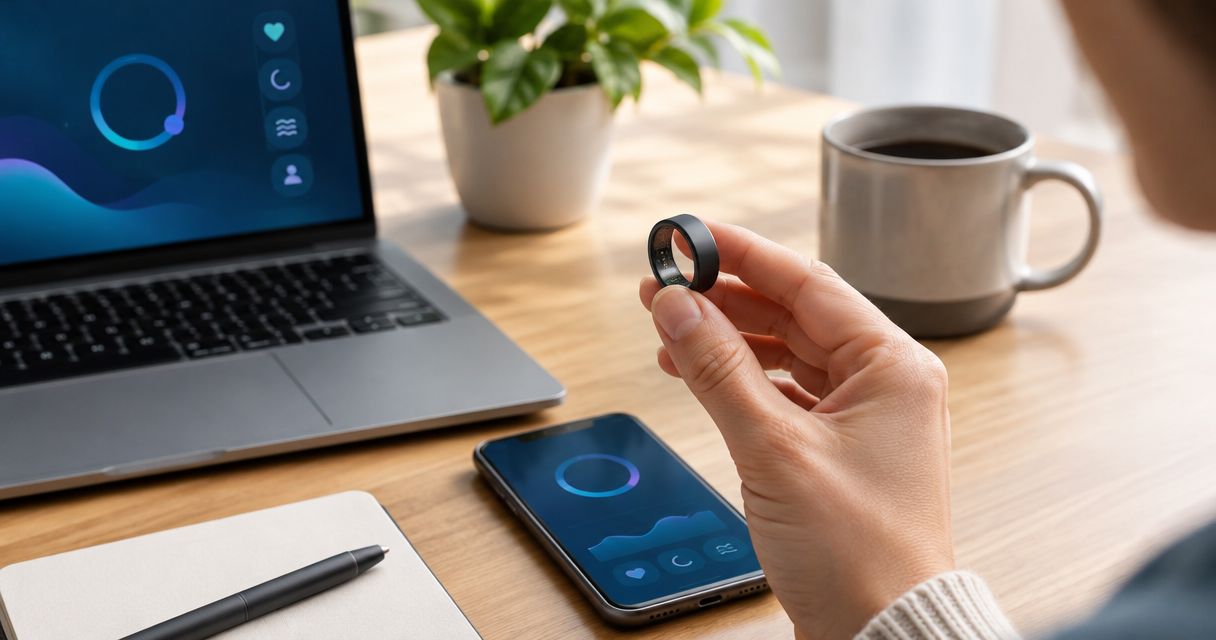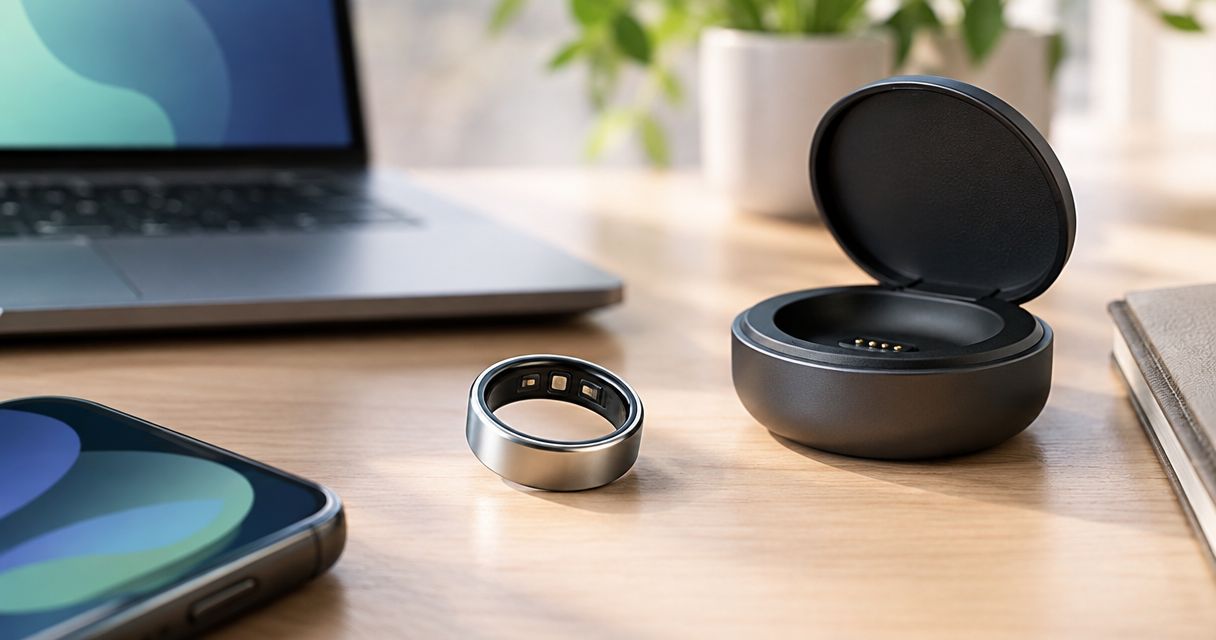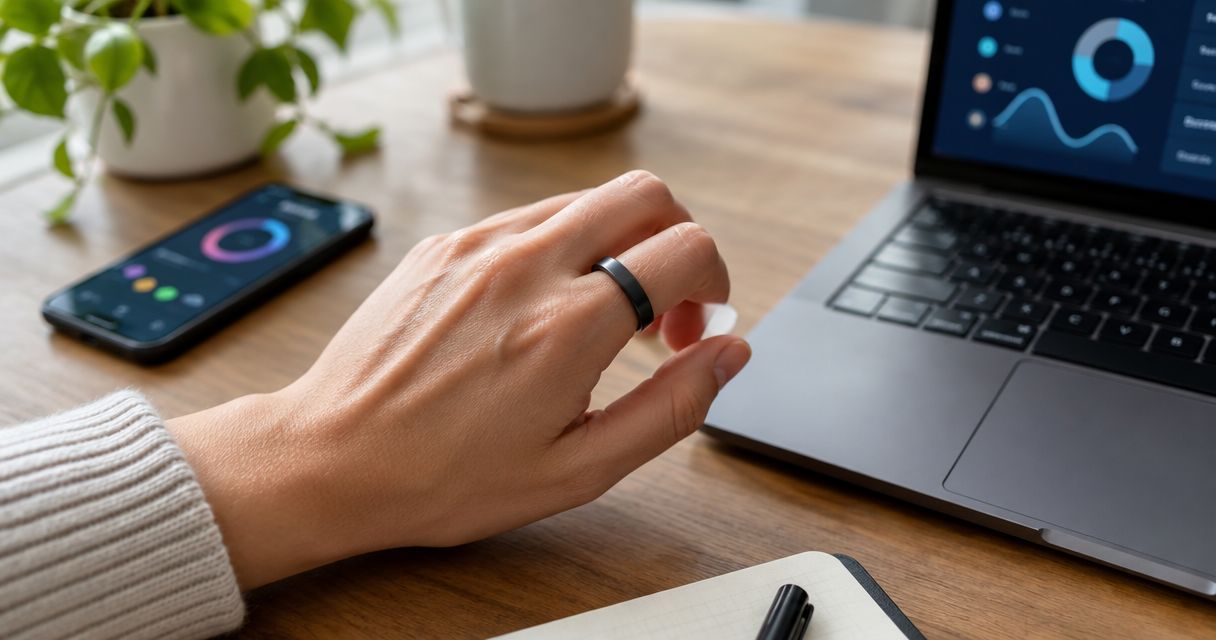

Instead of submitting a smart-ring receipt and hoping it qualifies, confirm the medical-expense rules with your benefits administrator, then build the reimbursement file before purchasing. An Actxa smart ring is not automatically HSA- or FSA-eligible: general wellness use does not establish a qualified medical expense.
- An hsa eligible smart ring needs a qualifying medical purpose; wellness tracking alone does not establish eligibility.
- Actxa Core Smart Ring is best for health-conscious users seeking discreet wearable tracking, not guaranteed reimbursement.
- Confirm HSA or FSA requirements before buying; a letter of medical necessity does not guarantee approval.
- Keep the itemized receipt, supporting medical documentation, and reimbursement records together.
Why this matters
A wearable sold for health tracking is not automatically a medical expense under federal tax rules. The IRS distinguishes expenses for medical care from purchases that merely benefit general health; a device's category or marketing language does not settle that distinction.
The Actxa store sells wellness devices, including the Core Smart Ring. That establishes what the product is—not whether your particular purchase qualifies for tax-advantaged reimbursement.
For a 2026 purchase, separate three questions: Does the expense qualify as medical care? Does your account cover the relevant expense date? What documentation supports reimbursement? IRS Publication 502 explains medical-expense principles, while Publication 969 explains HSA and other health-account rules. A seller's description, a successful card transaction, and a tax-qualified expense are different things.
Before you start
- Account access: Identify whether you have an HSA or a health FSA. Find the administrator's current reimbursement instructions, account establishment date or coverage dates, and any claim-submission deadline.
- Purchase and medical records: Have the exact product description, an itemized receipt if already purchased, and access to the treating clinician if the administrator requests medical documentation. Do not submit unrelated medical records.
- The non-obvious gotcha: A clinician's recommendation does not automatically make a general-wellness purchase eligible. Ask whether the device itself meets the applicable medical-expense requirements, not merely whether a letter can be uploaded.
If you are still researching an HSA eligible smart ring, use eligibility claims as a starting point for questions—not as permission to spend account funds. Establish the medical and account requirements before treating reimbursement as part of your purchase decision.
HSA and FSA reimbursement routes
An HSA and a health FSA both offer tax advantages for qualifying medical expenses, but their reimbursement processes differ. Choose the workflow that matches your actual account; neither account makes an otherwise ineligible ring eligible.
| Account | Best for | Main advantage | Main limitation |
|---|---|---|---|
| HSA | Eligible expenses incurred after the HSA was established, with records retained | Federal rules do not impose a deadline for reimbursing those qualifying expenses | You remain responsible for substantiating tax-free distributions |
| Health FSA | Eligible expenses incurred during the applicable coverage period | The plan provides a claims-review process | Coverage rules and submission deadlines constrain reimbursement |
For a 2026 claim, use your current plan documents rather than an old benefits email. With an HSA, the custodian's processing of a distribution does not establish its tax treatment. With a health FSA, follow the administrator's substantiation process and retain the decision.
Eligibility confirmation
- Identify the account. Check the benefits documents for the account type. If you have a limited-purpose FSA, ask about its restrictions before preparing a general medical claim.
- Describe the exact purchase. Give the administrator the product name and intended use. Distinguish ordinary fitness or wellness tracking from use in treating or managing a diagnosed medical condition.
- Ask what qualifies. Request the applicable eligibility criteria, required documentation, relevant expense date, and claim deadline. Ask whether accessories require separate review.
- Request a written response. Keep the response with the plan instructions. If the administrator cannot determine eligibility in advance, do not treat that uncertainty as approval.
Expected result: You know the account's requirements and whether further medical documentation is necessary. You have not confused a general list of eligible product categories with a determination about your purchase.
Use a specific question: Does this device qualify for reimbursement for this medical purpose, and what documentation supports that determination? Asking only whether smart rings are covered leaves the important details unresolved.
For HSA distributions, you retain responsibility for meeting federal tax rules even if the custodian allows the withdrawal. Seek qualified tax advice when the medical-purpose distinction remains unclear.
Medical documentation
- Discuss the actual medical purpose. Ask your treating clinician whether the device has a role in care for your condition. Do not request a diagnosis or treatment justification solely to obtain reimbursement.
- Obtain the administrator's requirements. If a letter of medical necessity is requested, get the required form or content requirements before asking the clinician to prepare it.
- Check the connection to treatment. Documentation should explain the medical purpose and why the device relates to that purpose, rather than merely stating that tracking health is beneficial.
- Match the documentation to the purchase. Check that the patient, device, relevant dates, and stated purpose are consistent across the documents. Correct factual errors before submission.
Expected result: Your file explains the medical basis for the expense, where one exists. A letter supports review; it does not override tax law or guarantee reimbursement.
Do not submit medical information that the administrator has not requested. Use the designated secure submission process rather than sending a full clinical history through ordinary email.
If the clinician describes the ring only as a general-wellness aid, stop treating reimbursement as established. You can still assess the device as a personal purchase without assuming a tax benefit.
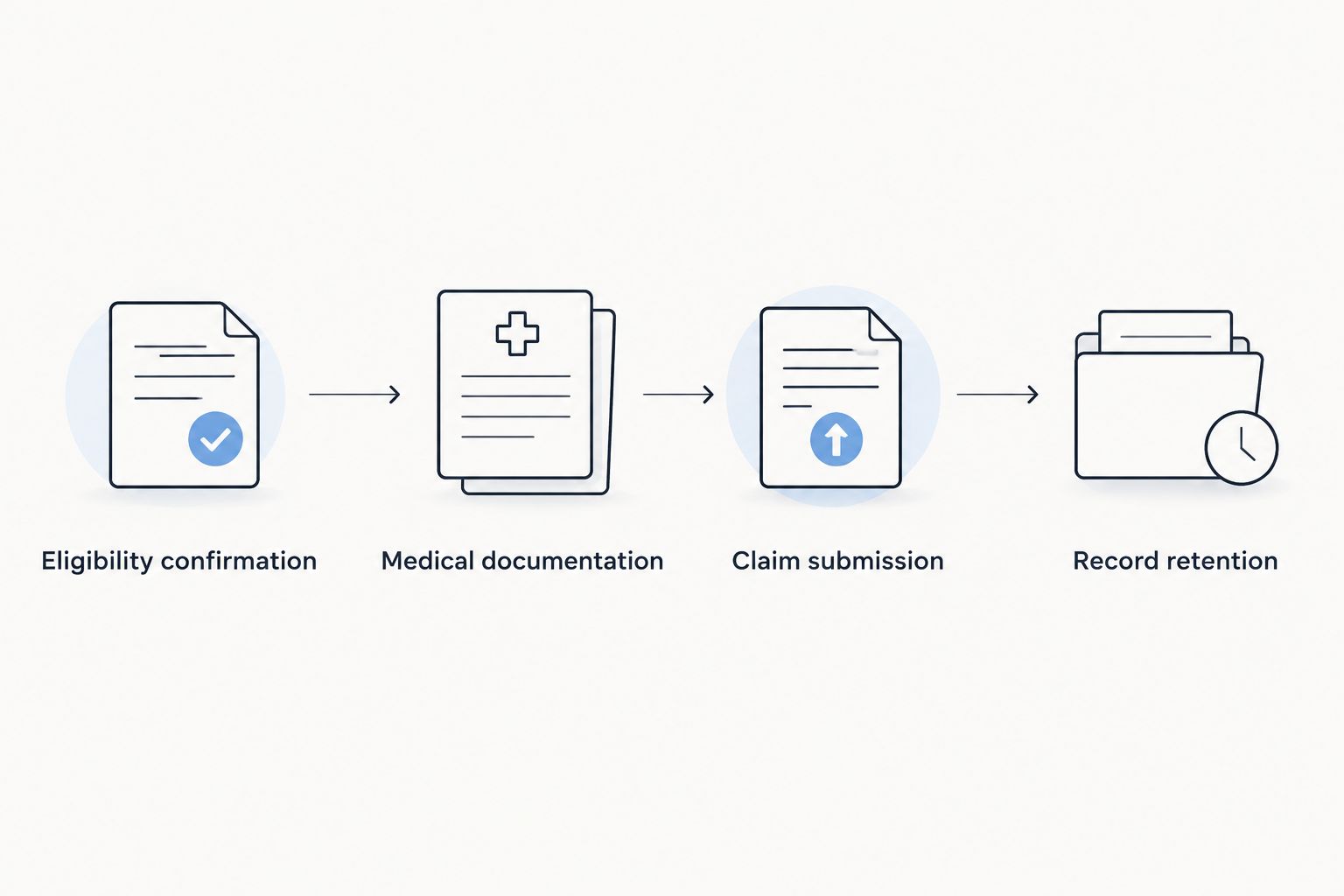
Claim submission
- Gather the receipt. Keep an itemized receipt showing the seller, product, purchase date, and amount paid. A payment-card statement alone generally does not identify what you bought.
- Select the correct account process. Use the health FSA's reimbursement process or the HSA custodian's distribution process. Follow the actual portal instructions; field names and available submission methods vary by administrator.
- Enter accurate expense details. Use the real product description, patient information, and applicable expense date. Do not relabel a wellness device as another type of medical equipment to fit a category.
- Attach the requested support. Include the itemized receipt and any required medical documentation. Save the submission confirmation and any reference number.
- Check the outcome. For an FSA, distinguish a received claim from an approved claim. For an HSA, distinguish a completed distribution from proof that the expense qualifies for tax-free treatment.
Expected result: The submission matches the purchase and contains the requested support. You have a record of what was submitted, not merely a bank transfer.
For a 2026 FSA submission, check the plan's deadline directly. The deadline for submitting claims is not necessarily the last date on which you can incur eligible expenses.
Record retention
- Create one reimbursement folder. Keep three core record types together: purchase evidence, medical-purpose support, and account or claim records. Include correspondence that explains the administrator's decision.
- Record reimbursement status. Note whether the expense is pending, approved, reimbursed, denied, or not submitted. Record partial reimbursement separately from the original expense.
- Prevent duplicate reimbursement. Do not reimburse the same expense through both an HSA and an FSA. An expense reimbursed tax-free also cannot be claimed again as an itemized medical-expense deduction.
- Preserve records for tax purposes. Follow applicable IRS record-retention guidance and your plan's requirements. Keep HSA substantiation yourself rather than assuming the custodian holds every supporting document.
Expected result: You can connect the purchase to its medical purpose, account eligibility, and reimbursement history without reconstructing the claim later.
For an HSA, record the account establishment date alongside the expense date. For an FSA, retain the relevant coverage-period and deadline information. Those dates answer different questions and should not be merged into a single purchase note.
Already bought the ring? Use the retrospective workflow
Buying before checking eligibility does not establish reimbursement rights, but it does not eliminate the need to assess the expense accurately. Start with the original receipt and the circumstances of the purchase.
- For an HSA: Confirm that the qualifying expense was incurred after the HSA was established. Federal rules allow later reimbursement of qualifying expenses, provided the required records are retained and the expense has not already been reimbursed or deducted.
- For a health FSA: Confirm that the expense falls within the applicable coverage period and that the submission deadline remains open. A claims run-out period allows submissions; it does not itself extend the period for incurring expenses.
- For either account: Ask what medical documentation is required. Do not backdate a letter or ask anyone to rewrite the purchase history.
If you bought the Actxa Core Smart Ring for general wellness, do not recast that purpose as medical treatment merely to obtain reimbursement. Ask for an accurate eligibility assessment based on the actual facts.
Expected result: You either submit a supported claim through the appropriate route or keep the purchase as a personal expense. An unsupported claim is not a useful shortcut.
Troubleshooting
The benefits card was declined
A declined transaction does not by itself settle whether an expense qualifies. Ask the administrator whether the issue concerns the payment process, merchant restrictions, or the expense itself; use reimbursement only if the purchase meets the applicable requirements.
The benefits card worked, but documentation was requested
Card acceptance is not final substantiation. Provide the requested itemized receipt and medical support, and follow the administrator's instructions if the transaction is determined to be ineligible.
The claim was denied despite a medical letter
Read the denial reason before resubmitting. Missing documentation, an ineligible expense, and a missed deadline require different responses; use the plan's appeal process when the facts support an appeal rather than repeatedly uploading the same letter.
The receipt includes accessories
Do not assume the ring and every accessory share the same eligibility determination. Ask the administrator which line items qualify and submit accurate itemized amounts without combining unsupported items into the device description.
The HSA withdrawal is complete, but eligibility is unresolved
Do not treat a completed withdrawal as an eligibility decision. Ask the custodian about its procedure for a mistaken distribution and obtain tax advice about the correct treatment; do not assume that an ordinary deposit automatically reverses it.
Customize your workflow
For your 2026 records, add a short reimbursement log to the purchase folder. Use separate entries for the expense date, documentation request, submission date, decision, and reimbursement status.
Separate the buying decision from the reimbursement decision. The Actxa Core Smart Ring is designed for health-conscious users who want a discreet wearable; that use case is distinct from a finding that the expense qualifies as medical care.
Before purchasing, also settle fit and intended use. A reimbursement file cannot resolve an unsuitable ring size, and a health-tracking feature does not establish medical necessity. If you add another device later, assess that purchase separately rather than copying the ring's eligibility outcome.
FAQ
Is the Actxa Core Smart Ring HSA or FSA eligible?
Eligibility is not automatic. A purchase must meet the applicable medical-expense requirements, and general wellness tracking alone does not establish eligibility; confirm the documentation and account rules before using tax-advantaged funds.
Do I need a letter of medical necessity for a smart ring?
Ask your administrator whether a letter is required for the specific expense and medical purpose. A letter can support review, but it does not guarantee eligibility or convert a general-wellness purchase into qualified medical care.
Can I reimburse myself after paying with a personal card?
Yes, if the expense qualifies and meets your account's timing and documentation requirements. For an HSA, the expense must have been incurred after the account was established; a health FSA applies its coverage-period and submission rules.
Does a successful HSA or FSA card payment prove eligibility?
No, successful payment does not prove that the expense qualifies. Retain the required documentation, and respond to any substantiation request from the administrator.
Can I claim the same ring through both my HSA and FSA?
No, you cannot receive duplicate tax-free reimbursement for the same expense. Keep a reimbursement log so that an approved claim is not submitted to another account.
What deadline applies to a smart-ring reimbursement in 2026?
A health FSA uses the plan's applicable submission deadline, while federal HSA rules do not impose a reimbursement deadline for qualifying expenses incurred after the HSA was established. Keep the records needed to substantiate any later HSA reimbursement.
What should I do if my smart-ring claim is denied?
Read the denial reason and follow the administrator's correction or appeal process. Correct missing or inaccurate documentation, but do not change the facts or assume a medical letter overrides an eligibility restriction.
One last thing
The most useful document is often the written eligibility explanation—not the payment confirmation. Save it with the receipt so you can distinguish what the administrator reviewed from what the account merely paid.
For your 2026 purchase, resolve that distinction before counting reimbursement as a benefit. A clear answer protects the buying decision as well as the claim.