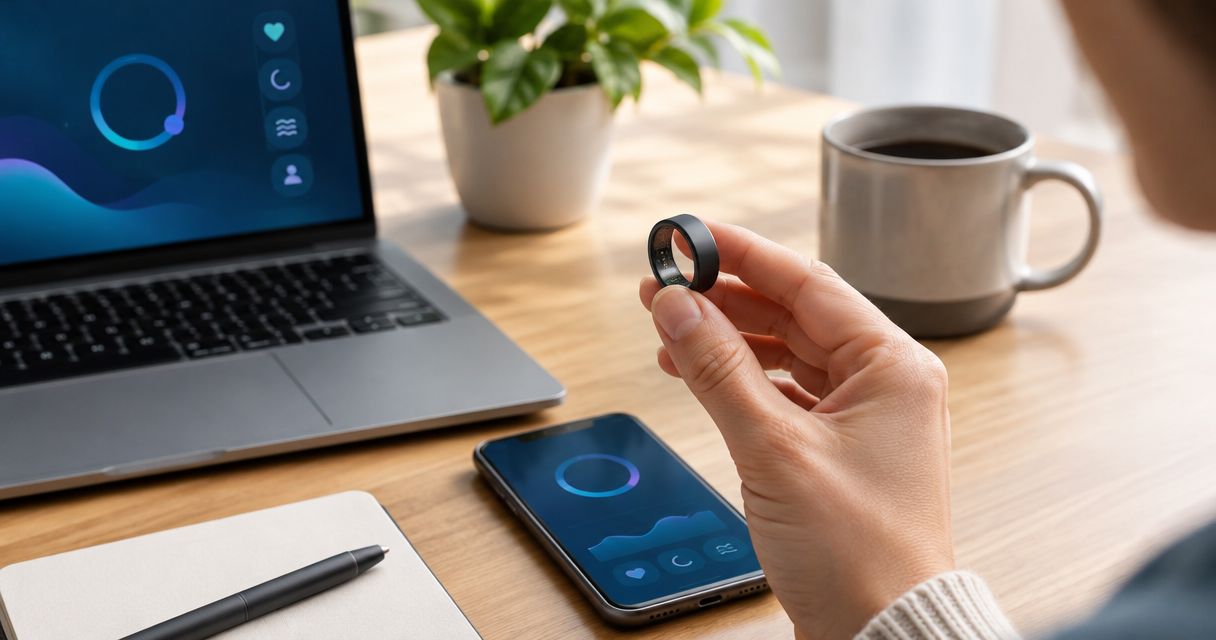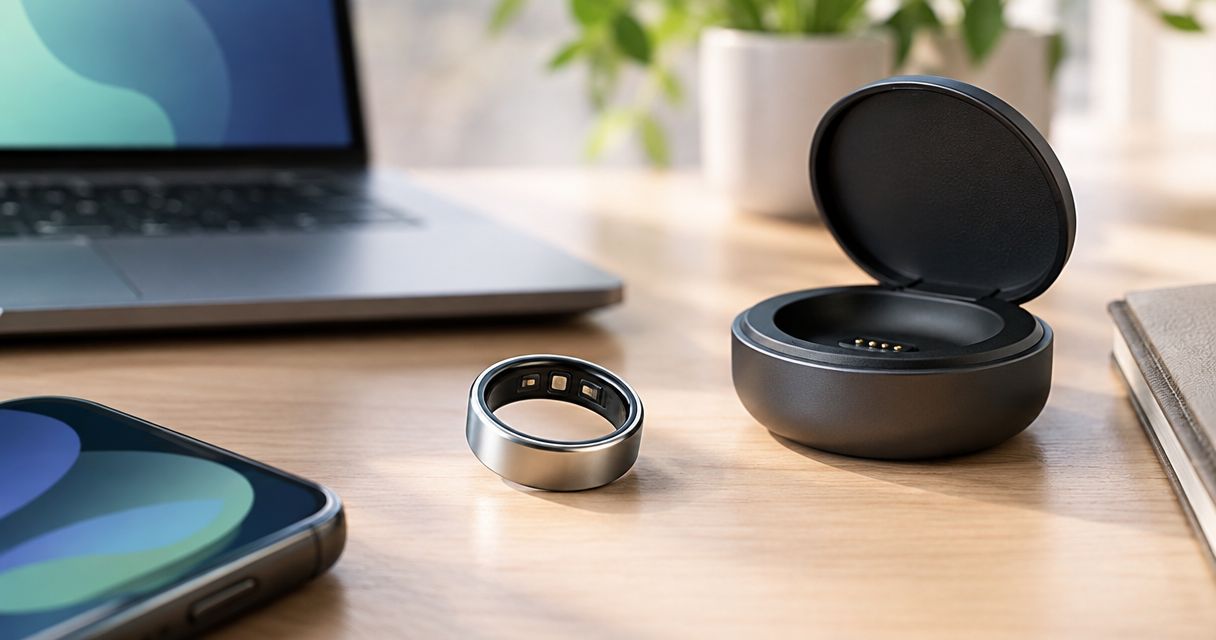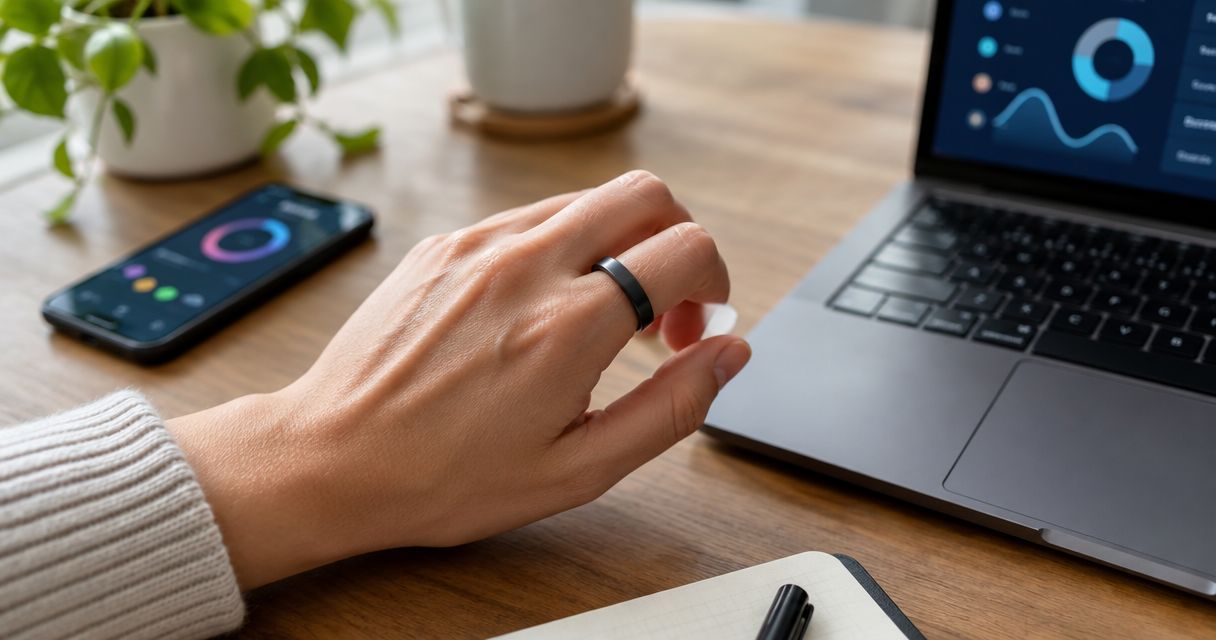

Nurses’ smart-ring tracking is wearable wellness monitoring with the aim of understanding personal health patterns around demanding shifts. Choosing a smart ring for nurses starts with your employer’s jewelry rules, then fit, off-duty usefulness, and the specific measurements you want—not a feature list alone.
- Choose a smart ring for nurses by workplace policy first, then comfort and verified health-tracking features.
- Actxa Core Smart Ring suits nurses seeking a discreet wellness wearable; workplace permission remains a separate requirement.
- For shift work, check daytime sleep recording before choosing a sleep-tracking device.
- Use wellness trends for personal reflection, not patient care, diagnosis, or fitness-for-duty decisions.
Why smart-ring tracking matters for nurses
Nursing creates a practical buying question: can you use a wearable consistently without interfering with hand hygiene, gloves, or local clinical rules? A ring that works for your personal routine still needs separate approval for your work setting. Water resistance does not establish permission to wear jewelry during care.
Shift work also changes what useful tracking looks like. If you sleep during the day, a device needs to recognize that sleep period rather than make you fit its reporting schedule. If you remove jewelry at work, your activity record will have gaps.
Actxa Core Smart Ring is best for nurses seeking a discreet wellness wearable, not a clinical monitoring device. Actxa describes the ring as health tracking for health-conscious users who want a discreet wearable; that positioning supports personal wellness use, not a claim of hospital suitability.
For your 2026 shortlist, separate three decisions: whether a ring is permitted, whether it is comfortable, and whether its documented features answer your question. Passing one does not settle the others.
How to choose a smart ring for nurses
1. Check your workplace jewelry policy first
Start with your staff handbook and the policy for your particular unit. Ask your manager or infection-prevention team about an electronic ring specifically; permission for a plain wedding band does not automatically settle the question.
Make the permitted wearing schedule explicit before buying. An off-duty-only ring can still serve a personal wellness purpose, but you should not expect it to represent activity across an entire shift. A device you cannot wear during care is not automatically a poor purchase; it is a different purchase.
Your policy check should cover more than the word “jewelry.” Glove use, cleaning requirements, and task-specific restrictions belong in the same conversation.
- Read the rules for your unit and role.
- Ask whether electronic rings are treated differently from plain bands.
- Confirm any restrictions during direct patient care or procedures.
- Identify a secure place to store the ring when removal is required.
- Decide whether off-duty tracking alone meets your goal.
2. Define one tracking question before comparing devices
Use a paper notebook or a basic phone note first. Write down the question you want answered: whether your sleep routine changes between shifts, whether you stay active on days off, or whether a wearable feels comfortable enough to keep using.
Keep a 7-day observation log as a practical starting exercise, not a clinical test. Record shift type, your main sleep period, and when you would remove a ring. This exposes gaps in your intended wearing routine before you commit to a device.
For a 2026 purchase, turn your question into a feature requirement. Sleep questions require documented sleep features; activity questions require documented activity features. “Health tracking” alone is not a complete specification.
- Choose 1 primary wellness question.
- Record workdays and days off separately.
- Note sleep start and wake times if sleep is your focus.
- Mark periods when workplace rules require removal.
- Separate essential measurements from interesting extras.
3. Test fit during your actual routine
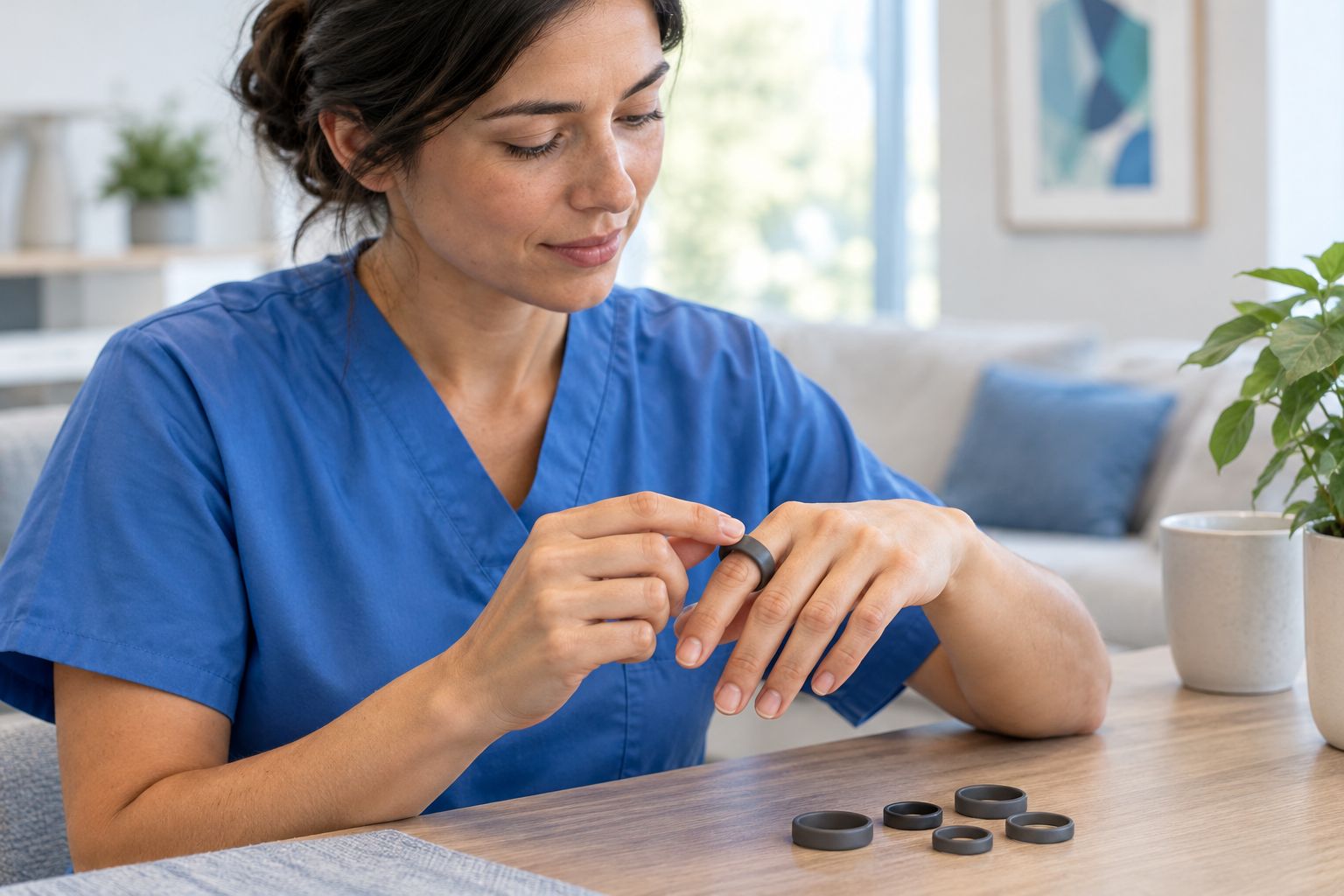
Begin with a sizing guide to understand the process, then use a physical sizing kit intended for the ring you are considering. A familiar jewelry size is not enough to assess the comfort of a particular wearable’s shape.
Actxa offers a Ring Sizing Kit for trying sizes before confirming a Core Smart Ring order. The useful role is straightforward: you can assess fit physically rather than choose from a measurement alone. The limitation is equally important: a sizing sample does not demonstrate the finished ring’s tracking performance.
Use the guide to measuring your smart ring size at home as preparation. Test during permitted activities; do not use a workplace sizing trial to bypass jewelry restrictions.
Complete 2 fit checks, one after waking and another later in your day. These are practical checkpoints, not a guarantee that a size will suit every situation.
- Follow the intended device’s sizing instructions.
- Check that you can remove the sample comfortably.
- Notice pressure, spinning, or interference with everyday grip.
- Assess comfort while resting and sleeping at home.
- Stop the trial if the sample causes pain or skin irritation.
4. Match documented features to shift work
Write your requirements down before reading product descriptions. For daytime sleep, check whether the device records sleep outside conventional nighttime hours, how it handles separate sleep periods, and whether you can correct an incorrectly detected session.
Do not assume that every smart ring measures the same things. For Core Smart Ring, the supplied description establishes discreet health tracking; confirm the current measurement list and operating requirements before choosing it for a specific sleep or recovery question.
Actxa also describes Spark Band as a screenless device covering sleep, recovery, fitness, and activity. That makes a wrist-worn format another option to evaluate, but it does not establish clinical suitability or permission under your employer’s policy.
For your 2026 comparison, distinguish a recorded measurement from an app’s interpretation. A recovery label is not a medical diagnosis or clearance to work.
- Verify each measurement you consider essential.
- Check daytime sleep and nap handling if relevant.
- Confirm phone compatibility and account requirements.
- Read charging and data-sync instructions.
- Check what happens to records during periods without wear.
5. Plan removal, cleaning, and charging
Build the routine manually before expecting a wearable to simplify it. Decide where the ring goes when you remove it, when you will follow the manufacturer’s cleaning instructions, and when charging fits around sleep and work.
Do not equate water resistance with resistance to every cleaning chemical. Follow the device’s care instructions and your workplace’s infection-prevention requirements separately. Neither replaces the other.
An off-duty wearable needs a repeatable home routine more than uninterrupted shift coverage. If charging repeatedly overlaps your intended sleep-tracking window, change the charging routine or reconsider whether that device fits your purpose.
- Choose a secure storage location away from patient-care supplies.
- Read the manufacturer’s cleaning instructions before first use.
- Check guidance on soaps, sanitizers, and other chemical exposure.
- Schedule charging outside the period you most want to record.
- Treat missing wear time as missing information, not inactivity.
6. Review comparable days instead of chasing scores
Start with your own notes, then use device records to add context. Compare workdays with similar workdays and days off with similar days off. A shift change is a reason to inspect the record, not automatically a sign that your health has worsened.
For your 2026 routine, keep wellness review separate from clinical judgment. A consumer wearable cannot decide whether you are safe to drive home, whether symptoms need assessment, or whether you are fit for a shift.
The easiest useful review is specific: identify one observation and one routine you want to examine. Avoid turning every fluctuation into a problem to solve.
- Tag workdays, days off, and shift transitions in your notes.
- Compare similar wearing windows.
- Record removal and charging gaps alongside the data.
- Use symptoms and professional advice rather than reassurance from a score.
- Change one routine at a time when evaluating your habits.
Compare the options for your nursing routine
Choose the format that fits your permitted wearing window. A ring prioritizes a finger-worn format; a band offers a wrist-worn alternative; manual notes require neither. None removes the need to interpret records in context.
| Option | Best for | Main advantage | Key limitation |
|---|---|---|---|
| Core Smart Ring | Nurses seeking discreet, finger-worn wellness tracking | Described as health tracking in a discreet wearable | Confirm specific measurements; workplace ring rules still apply |
| Spark Band | Nurses considering a screenless wrist-worn wellness device | Its description includes sleep, recovery, fitness, and activity | Wristwear needs a separate workplace-policy check |
| Manual sleep and shift log | Nurses clarifying their goal before choosing hardware | Captures shift context and removal periods directly | Requires consistent entries and does not automatically collect sensor data |
A manual log is the strongest starting point when you do not yet know which measurement matters. A physical sizing trial is the next move when you have decided that a ring is the right format.
The Core Smart Ring and Ring Sizing Kit below serve those separate decisions. Best for discreet wellness tracking: the ring. Best for checking fit before selection: the kit. Neither establishes that a ring is permitted during patient care.


Common mistakes nurses make when choosing a smart ring
Treating water resistance as workplace approval
A water-resistance specification answers a device-exposure question, not an infection-prevention question. Check policy first, even if a ring is advertised for everyday wear or water exposure.
Buying for nighttime sleep without checking daytime recording
A nurse sleeping after a night shift needs recording that suits that schedule. Confirm how the intended device handles daytime sleep, separate sleep periods, and corrections before making sleep tracking the reason to buy.
Expecting complete activity records after removing the ring
A ring cannot directly record your movement while it sits in storage. Keep the gap visible in your interpretation; do not compare a partly recorded workday with a fully recorded day off as though the coverage were equal.
Treating a wellness score as clearance to work
A reassuring app result does not override fatigue, symptoms, or your workplace’s reporting procedures. Use wellness records to support personal reflection, not to dismiss a concern that needs professional assessment.
Choosing by features before testing comfort
A long measurement list does not resolve pressure, awkward grip, or uncomfortable sleep. Check fit before making the feature list the deciding factor, and follow the manufacturer’s guidance if irritation occurs.
FAQ
What’s the best smart ring for nurses?
The best smart ring for nurses fits workplace policy, feels comfortable, and documents the measurements you need. Actxa Core Smart Ring is positioned for discreet personal health tracking; confirm its specific features before choosing it for a particular tracking goal.
Can nurses wear a smart ring at work?
Your employer’s jewelry and infection-prevention policies determine whether you can wear a smart ring at work. Ask about electronic rings and your particular clinical duties rather than assuming permission for a plain band applies.
Can I wear a smart ring under clinical gloves?
Do not assume that fitting beneath a glove makes a smart ring acceptable for clinical work. Check your workplace’s jewelry and glove requirements before wearing it during patient care.
Can a smart ring track sleep after a night shift?
Choose a device that explicitly supports recording sleep during your actual sleeping hours. Check daytime sleep detection, separate sleep periods, and correction tools before buying for shift-work sleep tracking.
Is a smart ring better than a fitness band for nurses?
Neither format is universally better for nurses; permitted wear and personal comfort decide the fit. A ring uses a finger-worn format, while a band uses the wrist, and each needs its own policy and feature checks.
Will a smart ring record my steps if I leave it in my locker?
A smart ring cannot directly record your movement while it is in your locker. Mark that period as a wear gap and avoid treating the resulting activity record as complete shift coverage.
Can a nurse use a smart ring to diagnose a health problem?
Do not use a consumer wellness ring to diagnose a health problem or assess a patient. Seek appropriate medical assessment for symptoms rather than relying on a reassuring wearable reading.
One last thing
Before buying in 2026, write down the hours when you are actually allowed and willing to wear a ring. Your wearing window is the specification that decides whether the rest of the features matter. If your main question concerns off-duty rest, workplace removal need not defeat the purpose; if your goal is full-shift activity tracking, removal creates a direct mismatch.