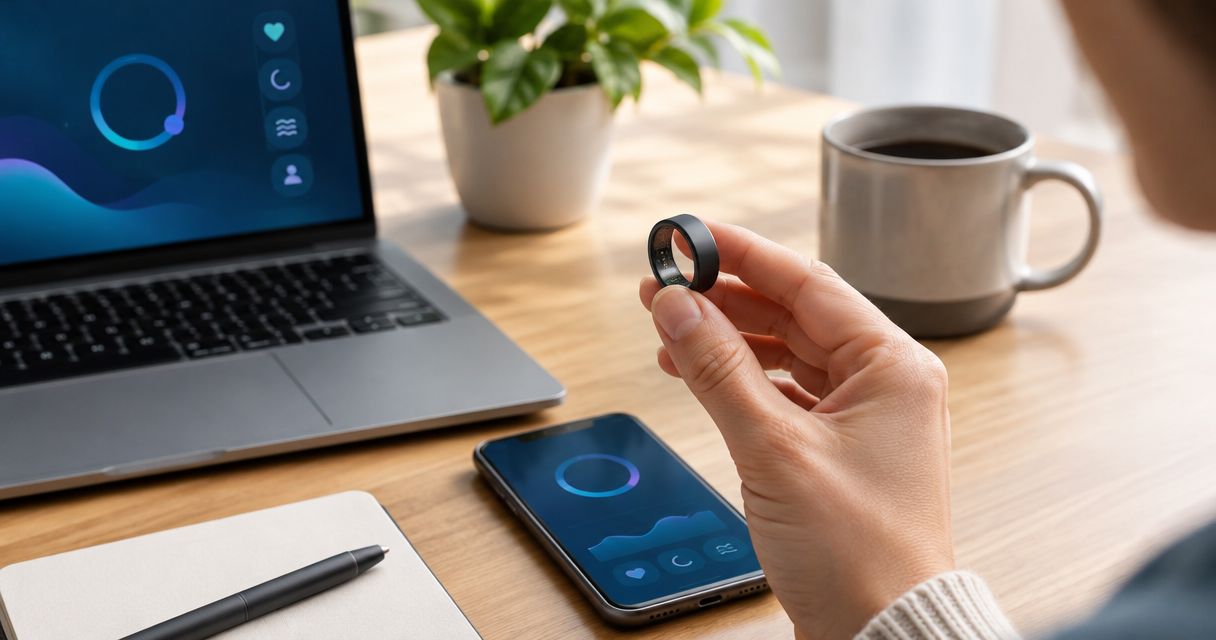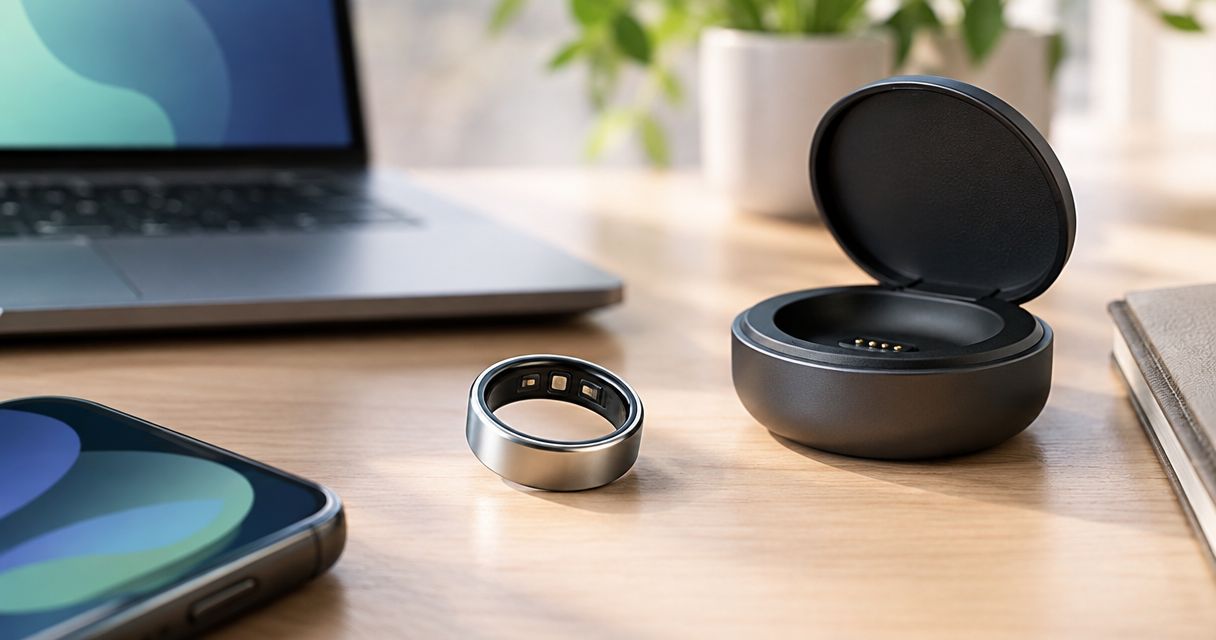
Yes, a smart ring can track blood oxygen if the specific model includes an SpO2 measurement feature; a ring that measures heart rate does not automatically measure oxygen saturation. In 2026, treat consumer ring readings as wellness estimates—not as a diagnosis, a substitute for a medical pulse oximeter, or proof that breathing is normal.
- Can a smart ring track blood oxygen? Yes, but only models with an explicitly supported SpO2 feature.
- Smart rings suit overnight wellness tracking; medical pulse oximeters serve a different purpose.
- Actxa serves health-conscious wearable buyers; confirm model-specific oxygen features before choosing a device.
- Fit, movement, circulation, and measurement conditions affect optical readings.
- Breathing symptoms require medical attention even when a wearable displays a reassuring result.
Can a smart ring track blood oxygen levels?
A smart ring can estimate blood oxygen saturation when its sensors and software support SpO2 measurement. Check the exact model, not just the product category: heart-rate tracking, sleep tracking, and oxygen tracking are separate capabilities.
For any 2026 purchase, establish what the ring actually reports. An overnight average, an occasional spot reading, and a chart of changes during sleep answer different questions.
| Option | Best for | Main advantage | Main limitation |
|---|---|---|---|
| Smart ring with SpO2 support | Tracking wellness patterns during wear | Keeps measurement in a wearable format | Features, sampling, and validation differ by model |
| Medical-purpose fingertip pulse oximeter | Checking oxygen saturation under appropriate instructions | Designed specifically for pulse oximetry | Technique and circulation still affect readings |
| Clinician-directed assessment | Investigating symptoms or concerning results | Places oxygen measurements in medical context | Requires professional assessment rather than a wearable score |
If you are browsing Actxa, apply that same feature check before selecting a wearable. A health-tracking description alone does not establish that a particular device measures blood oxygen.
Why this matters
A blood oxygen percentage looks precise. That precision does not tell you whether the device captured a clean signal, whether its measurement has medical validation, or whether the result explains how you feel.
The FDA's consumer guidance on pulse oximeters warns that readings have limitations and should not replace attention to symptoms. That distinction matters when a wellness device presents an oxygen result alongside familiar activity and sleep metrics.
Use oxygen data to inform a conversation, not to close one. A reassuring number is not permission to ignore shortness of breath, chest pain, or other concerning symptoms.
How does a smart ring estimate blood oxygen?
Optical oxygen sensing uses the different ways oxygenated and deoxygenated hemoglobin absorb light. Compatible sensors shine light into tissue and analyze the returning signal to estimate arterial oxygen saturation.
Conventional pulse oximetry commonly uses red light near 660 nanometers and infrared light near 940 nanometers. Those wavelengths explain the measurement principle; they are not specifications for every smart ring.
A ring also needs suitable signal processing. Having an optical sensor does not establish that a device can produce a validated oxygen estimate, and having a heart-rate reading does not establish oxygen capability.
The distinction between measurement and interpretation is just as important. SpO2 estimates how much hemoglobin is carrying oxygen; it does not directly measure airflow, identify why oxygen changed, or diagnose a sleep disorder.
Blood oxygen and heart rate are different measurements
Heart rate describes how frequently your heart beats. SpO2 estimates oxygen saturation, so the two values can appear together without answering the same health question.
Do not accept a product listing that uses broad language such as health monitoring as confirmation of oxygen tracking. Look for an explicit SpO2 or blood oxygen feature, then read how that feature operates.
Overnight tracking: best for observing sleep-related patterns
Overnight oxygen tracking can provide context for changes recorded during sleep. Its usefulness depends on what the device measures and how clearly the app explains the results.
Check whether the display shows an average, individual samples, or periods identified as unusual. An average summarizes a recording; it does not reveal every change within it.
The advantage is convenience: a wearable can collect information while you sleep without requiring you to start each measurement manually, if that model supports automatic recording. The limitation is interpretation. An overnight chart cannot establish the cause of a change or rule out a breathing disorder.
For a 2026 comparison, ask whether you can inspect the underlying timeline rather than only a headline score. Choose understandable reporting over an unexplained wellness score.
Spot checks: best for a deliberate measurement
A spot check gives you a reading taken during a specific measurement session. It is useful for answering a narrower question than an overnight summary: what did the device estimate under those conditions?
Its main advantage is control. You can follow the manufacturer's instructions, remain still, and check whether the measurement completed properly.
Its main limitation is timing. A spot check cannot describe what happened earlier in the night, and repeating a questionable reading does not turn a wellness device into a medical instrument.
If oxygen monitoring is part of your medical care, follow your clinician's device and measurement instructions. Do not substitute a ring simply because both devices display a percentage.
Why smart ring blood oxygen readings vary
Optical measurements depend on both the device and the conditions at your finger. These factors explain why an isolated result deserves context rather than an immediate conclusion:
- Fit and contact: A loose or shifting ring changes sensor contact. Follow the manufacturer's sizing and wearing instructions.
- Movement: Motion can interfere with the optical signal. A reading taken during activity is not directly interchangeable with a still measurement.
- Circulation and temperature: Cold fingers and reduced circulation can make optical measurements harder to obtain reliably.
- Skin pigmentation: The FDA identifies skin pigmentation as a factor affecting pulse oximeter accuracy. Do not assume every optical device performs identically across users.
- Measurement method: A spot check and an overnight summary represent different sampling conditions. Compare like with like.
- Device validation: Sensor design and algorithms differ. Evidence for one model does not establish the performance of another.
A repeated pattern under similar conditions is easier to discuss than disconnected readings taken under different conditions. That still does not establish a diagnosis.
How should you check an unexpected ring reading?
Start with symptoms, then check the measurement. A device troubleshooting routine must never delay urgent care when you have severe breathing difficulty, chest pain, or other emergency symptoms.
If you feel well and are reviewing an isolated wellness reading, use this sequence:
- Check symptoms. Note how you feel rather than judging your condition from the number alone.
- Check fit. Confirm that the ring sits as directed and that its sensor area is clean.
- Rest and recheck. Follow the device's instructions for positioning, stillness, and repeating a measurement.
- Record context. Keep the time, result, symptoms, and relevant circumstances together.
- Seek guidance. Discuss repeated unusual results with a clinician, using a medical-purpose device if instructed.
The sequence separates a possible measurement problem from a health question that needs professional assessment. It does not determine which explanation is correct.
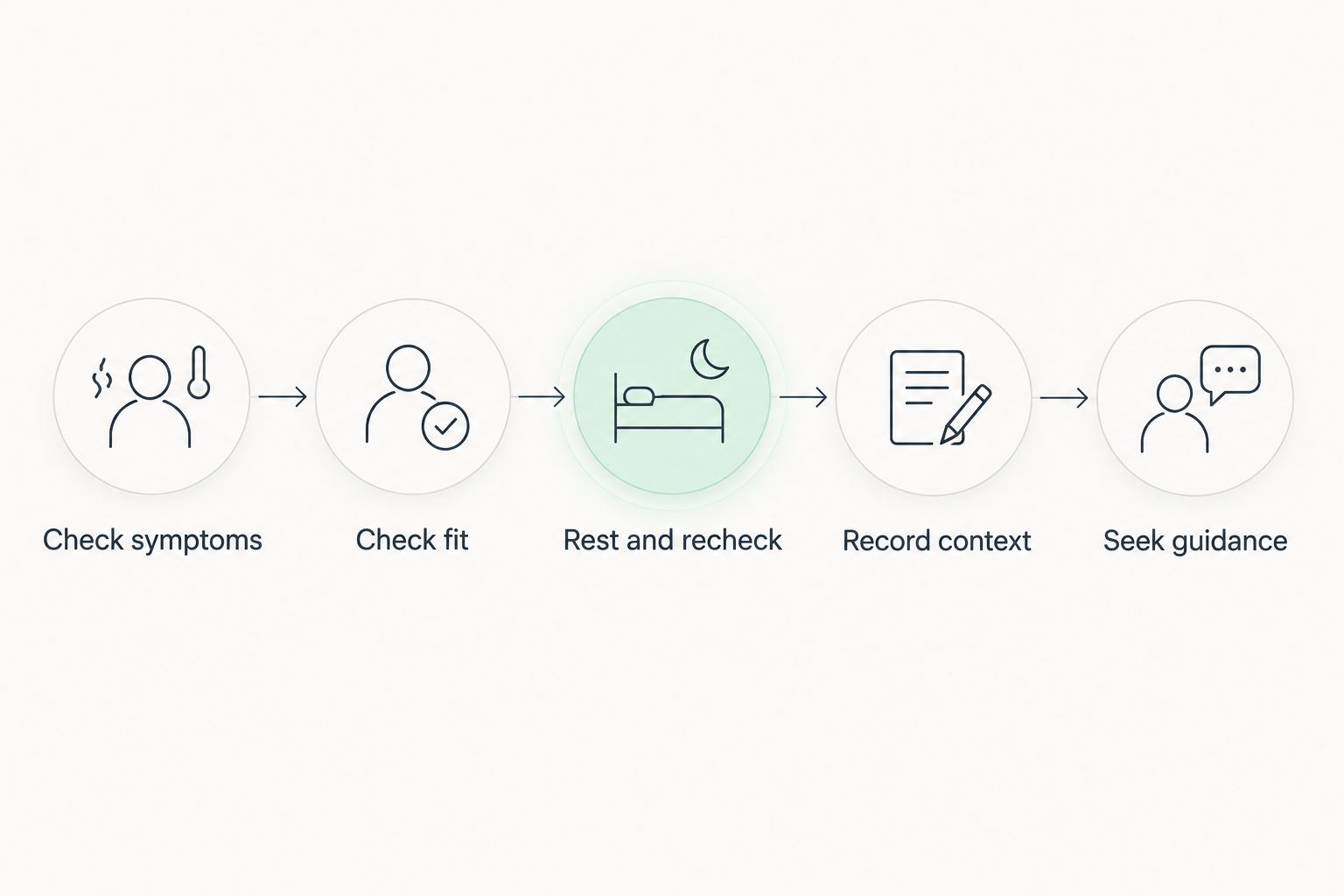
Keep the original result if you repeat a measurement. A later reading does not erase the earlier observation; the sequence and circumstances help a clinician understand what you saw.
What blood oxygen level is considered normal?
An SpO2 reading of 95%–100% is typical for many healthy people at sea level. Altitude, health conditions, and an individual's care plan affect interpretation, so this general range is not a personal treatment target.
A ring reading outside that range does not explain the cause. It also does not establish whether the difference reflects physiology, measurement error, or a device limitation.
Avoid applying a universal emergency threshold to every consumer ring result. Ask your clinician what readings require action for you, which device to use, and what symptoms override the number.
In 2026, the essential distinction remains the same: a reference range describes a population, while a medical action plan applies to an individual. Symptoms and clinical instructions take priority over a wellness dashboard.
Can a smart ring detect sleep apnea?
Blood oxygen tracking alone cannot diagnose or rule out sleep apnea. Oxygen changes have multiple possible explanations, and a general wellness feature is not equivalent to a specifically authorized diagnostic function.
If you notice repeated unusual nighttime results, discuss them alongside symptoms such as witnessed breathing pauses or excessive daytime sleepiness. A clinician can decide whether a sleep assessment is appropriate.
Do not use a normal-looking overnight average to dismiss persistent symptoms. A summary can conceal variation, and oxygen is only one part of assessing sleep-related breathing.
Is a smart ring as accurate as a pulse oximeter?
Accuracy depends on the exact devices, their intended uses, and the conditions in which they were evaluated. There is no defensible category-wide accuracy ranking that makes every ring better or worse than every fingertip device.
For medical monitoring, use a device intended for that purpose and follow clinical instructions. Even medical-purpose pulse oximeters have limitations, including errors related to circulation, movement, and skin pigmentation.
When comparing devices in 2026, look for validation tied to the exact model and oxygen feature. A general accuracy claim about heart rate or sleep does not establish SpO2 accuracy.
What should you confirm before buying a ring for oxygen tracking?
Start with the job you need the ring to do. Tracking wellness patterns and managing a diagnosed condition are different requirements, even when both involve oxygen readings.
Before choosing, confirm:
- The exact model explicitly lists SpO2 measurement.
- The feature works in the measurement mode you need.
- The app explains what its averages, gaps, and alerts mean.
- The manufacturer states the feature's intended use and limitations.
- Model-specific evidence supports any accuracy claims that matter to your decision.
- The ring fits comfortably according to its sizing instructions.
Actxa wearables are best for health-conscious consumers seeking wellness tracking, not a replacement for medical assessment. The Core Smart Ring is described as a discreet health-tracking wearable; that description alone does not confirm oxygen measurement, sampling frequency, or medical clearance.
The practical advantage is the discreet wearable format. The buying constraint is equally clear: confirm the oxygen feature separately rather than assuming it comes with general health tracking.
FAQ
Can a smart ring track blood oxygen while I sleep?
A smart ring can track blood oxygen during sleep if that exact model supports overnight SpO2 recording. Check whether its app displays averages, individual samples, or a timeline, because those outputs describe different things.
Does every smart ring measure blood oxygen?
No, blood oxygen measurement is not a universal smart ring feature. Heart-rate and sleep tracking do not establish that a device supports SpO2.
What's a normal blood oxygen reading on a smart ring?
An SpO2 reading of 95%–100% is typical for many healthy people at sea level, but a consumer ring estimate is not a personal medical target. Altitude, health conditions, symptoms, and device limitations affect interpretation.
Can I use a smart ring instead of a medical pulse oximeter?
Do not replace a clinician-recommended pulse oximeter with a wellness ring. Use the device and measurement routine specified in your care plan.
Why does my ring show a low oxygen reading when I feel fine?
A low ring reading can reflect a genuine change or a measurement problem; the number alone cannot distinguish them. Check the wearing instructions and discuss repeated unusual results with a clinician.
Can a smart ring tell me whether I have sleep apnea?
General blood oxygen tracking cannot diagnose or rule out sleep apnea. Persistent symptoms or repeated concerning nighttime results require professional assessment.
Does Actxa's health-tracking description confirm blood oxygen monitoring?
No, a general health-tracking description does not confirm blood oxygen monitoring. Check the exact model's current specifications and instructions for an explicit SpO2 feature.
One last thing
A missing oxygen reading is not a normal oxygen reading. A gap tells you that the device did not report a result for that period; it does not tell you what your oxygen level was.
Before interpreting an overnight chart, check both its values and its gaps. That simple habit keeps an incomplete recording from becoming false reassurance.