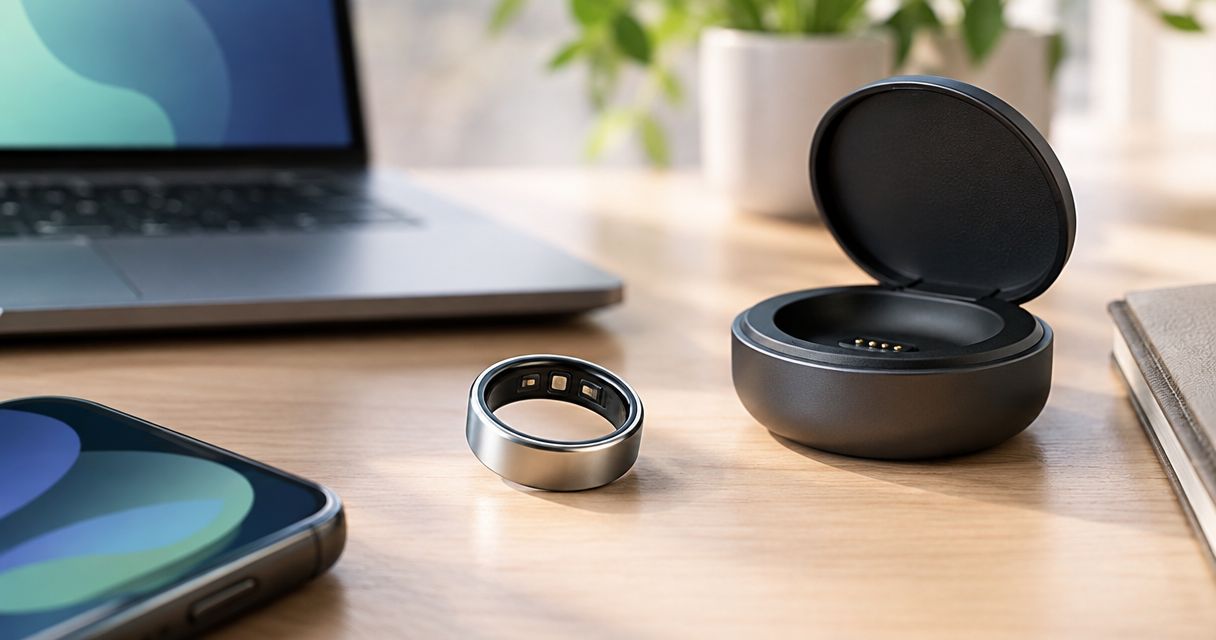
No—do not rely on a smart ring to measure blood sugar for diabetes care in 2026. Use an FDA-authorized blood glucose meter or continuous glucose monitor (CGM) when you need glucose readings; a ring’s wellness estimates or an app displaying data from another device are not the same as measuring glucose.
- Is there a ring that monitors blood sugar? Do not substitute a smart ring for an authorized glucose meter or CGM.
- The FDA warns against rings claiming to measure blood glucose without piercing the skin.
- Actxa sells wellness wearables; wellness tracking does not establish medical glucose-monitoring capability.
- Check the exact device’s FDA authorization and intended use before trusting a glucose claim.
Why this matters
An inaccurate glucose reading can lead you to take the wrong action, including changing medication when you should not. The distinction matters whether you manage diabetes or simply want to understand how meals and exercise affect your body.
The Actxa store sells wearable wellness devices. Actxa is best for shoppers seeking wellness devices, not a replacement for medically indicated glucose monitoring. Choose a device according to the measurement you need, rather than assuming every health wearable measures the same things.
For a 2026 purchase, separate three questions: what the device senses, what the app estimates, and what the device is authorized to do. A polished chart answers none of those questions on its own.
Can a smart ring monitor your blood sugar?
A smart ring should not replace an authorized glucose meter or CGM. A ring that claims to estimate glucose without piercing the skin needs specific evidence and regulatory authorization for that purpose—not just evidence that it records other wellness signals.
In its February 21, 2024 safety communication, the US Food and Drug Administration warned consumers against smartwatches and smart rings claiming to measure blood glucose without piercing the skin. The warning covered devices claiming to measure glucose themselves, not apps that display readings from a separate authorized glucose-monitoring device.
That distinction is central to evaluating products in 2026. Seeing a glucose number on a wearable does not establish where the number came from or whether you can use it for treatment decisions.
| Device or approach | What it measures or shows | Best for | Main limitation |
|---|---|---|---|
| Smart ring | Wellness signals; capabilities depend on the model | People seeking wearable wellness tracking | Wellness sensing does not establish glucose measurement |
| Glucose meter | Glucose in a small blood sample | People needing blood glucose checks according to their care plan | Requires a blood sample and compatible testing supplies |
| CGM | Glucose in interstitial fluid through a sensor | People who need ongoing glucose trends and meet the device’s intended use | Requires a sensor inserted through the skin; instructions vary by system |
| Connected display | Readings supplied by another device | People viewing readings from a compatible glucose system | The display is not necessarily the measuring device |
A ring and a glucose monitor can serve different roles in the same routine. The problem starts when a wellness measurement is presented—or interpreted—as a medically usable glucose result.
Smart rings: wellness tracking is not glucose measurement
Smart rings place sensors close to your skin in a compact form. Many use optical sensors to detect changes associated with blood flow, but detecting a pulse is not the same as identifying the glucose concentration in blood.
The Core Smart Ring is described as a health-tracking wearable for health-conscious users who want a discreet device. That description supports a wellness role; it does not establish that the ring measures blood glucose or can guide diabetes treatment.
Best for: people who want a discreet wellness wearable. The advantage is the ring format; the limitation is that the format alone tells you nothing about glucose capability, clinical accuracy, or suitability for medication decisions.
Do not fill that gap with assumptions about an app. A health dashboard can combine measured signals, calculated estimates, and manually entered information, so you need to identify the source of each metric separately.
Glucose meters: direct checks from a blood sample
A blood glucose meter measures glucose using a blood sample, commonly collected with a finger stick. You apply the sample to a compatible test strip and follow the meter’s instructions for obtaining and interpreting the result.
Best for: people whose care plan calls for blood glucose checks. A meter gives you a measurement at the time you test, but it does not automatically show what happened between checks.
The practical drawback is the testing process: you need the meter, compatible supplies, and a suitable sample. Technique and storage matter, so use the manufacturer’s instructions rather than assuming every meter works identically.
If you are comparing a ring with a meter in 2026, start with purpose. A device designed to record wellness signals does not become a blood glucose meter because it is more convenient to wear.
CGMs: ongoing glucose trends from a sensor
A CGM uses a sensor inserted through the skin to measure glucose in interstitial fluid, the fluid surrounding cells. A compatible receiver or app displays readings and trends according to the system’s design.
Best for: people who need ongoing glucose information and fall within the system’s intended use. The benefit is visibility into changing glucose patterns; the trade-off is wearing and replacing a sensor according to its instructions.
Interstitial glucose and blood glucose are related, but they are not identical measurements. Differences can be especially relevant when glucose changes quickly, which is why you must follow the particular system’s instructions when symptoms and readings disagree.
Some systems permit treatment decisions under specified conditions. Do not transfer that permission to a different device, a connected ring, or an unrelated wellness estimate.
Why glucose claims vary
The phrase blood sugar monitoring can conceal very different functions. Before choosing a device in 2026, check these five factors:
- Measurement source: Does the number come from a blood sample, an inserted sensor, or a calculation based on other signals?
- Intended use: Is the device for general wellness, glucose monitoring, or a narrower research purpose?
- Regulatory status: Does authorization cover the exact model and the glucose function being advertised?
- Data connection: Does the wearable measure anything itself, or merely display information from another device?
- Decision limits: Do the instructions allow treatment decisions, require confirmation in certain situations, or prohibit medical use?
Words such as awareness, insights, and trends do not establish medical glucose-monitoring capability. Read the actual intended-use statement and instructions, not just the headline.
How do you check a ring’s blood sugar claim?
Use this sequence before treating any wearable’s glucose claim as credible. It separates the sensing question from the medical-use question, which are easy to confuse.
- Identify the measurement. Find a clear statement of what the device measures, including whether it reports glucose or another signal associated with wellness.
- Trace the reading. Establish whether the value originates in the ring, a separate glucose sensor, a manual entry, or a calculated estimate.
- Check authorization. Look for the exact device in the FDA’s relevant device records and confirm the authorized purpose. A general reference to the FDA is not enough.
- Read the instructions. Check who the device is intended for, its limitations, and what it says about treatment decisions.
- Match your need. If you need diabetes monitoring, discuss an appropriate glucose meter or CGM with your clinician rather than substituting a wellness wearable.
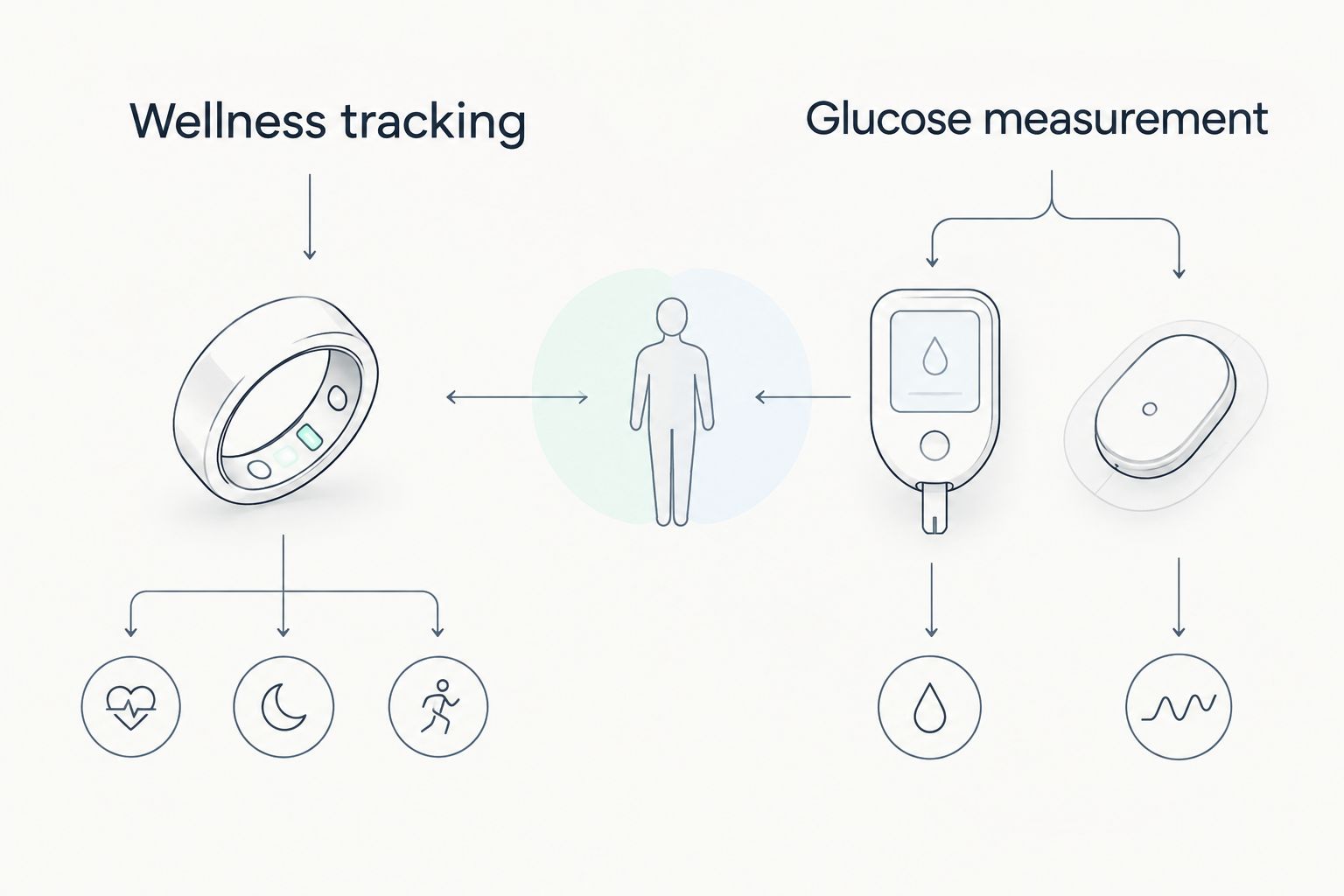
A useful way to organize the choice is to separate Wellness tracking from Glucose measurement. A Smart ring belongs in the first discussion unless its specific glucose capability is established; a Glucose meter or CGM belongs in the second when used within its authorization.
FDA registration or listing is not the same as authorization for a particular glucose-monitoring claim. Likewise, a study about a sensing method does not establish that every consumer device using related language is suitable for diabetes care.
Can a ring show glucose readings from another device?
A connected wearable can display glucose information only when the relevant devices and software support that connection. In that arrangement, the separate glucose system supplies the measurement; the wearable is a display.
This is the distinction the FDA made in its safety communication. A device that displays data from an authorized glucose system is different from a ring claiming to measure glucose independently without piercing the skin.
Before depending on a connection, check the exact compatibility and instructions. Do not assume a connection exists because two devices share a phone platform, and do not assume every screen repeats every alert or limitation of the original system.
Can sleep or heart-rate data tell you your blood sugar?
Sleep, activity, and heart-rate information cannot substitute for a glucose reading. These signals can provide context for your routine, but they do not tell you a specific blood glucose concentration.
For example, recording a walk after dinner and reviewing sleep patterns answers different questions from checking glucose after a meal. You can discuss both types of information with a clinician without treating them as interchangeable.
This is also the right boundary for Actxa wellness wearables: use documented wellness functions for their stated purpose. Do not turn a pattern in another metric into an assumed glucose value.
What should you do if symptoms do not match a wearable?
Do not use a ring’s wellness estimate to dismiss symptoms or change diabetes medication. Follow your prescribed monitoring plan and the instructions for your glucose meter or CGM, including guidance about confirming unexpected readings.
For many adults with diabetes, the American Diabetes Association describes glucose below 70 mg/dL as low. Its commonly taught approach for a conscious person able to swallow is 15 grams of fast-acting carbohydrate followed by another glucose check after 15 minutes; follow your individual treatment plan, including instructions for repeating treatment.
If someone cannot swallow safely, is unconscious, or has a seizure, seek emergency help and follow their prescribed emergency plan. Do not give food or drink by mouth to someone who cannot swallow safely.
FAQ
Is there a ring that monitors blood sugar without a needle?
Do not rely on a ring claiming to measure blood sugar without piercing the skin for diabetes care. The FDA warned against this category of claim in its February 21, 2024 safety communication; check the exact device’s authorization and intended use.
Is a smart ring better than a CGM for diabetes monitoring?
A smart ring is not a substitute for an authorized CGM. A CGM measures glucose through an inserted sensor, while a wellness ring’s other measurements do not establish glucose-monitoring capability.
Does Actxa sell a ring that measures blood glucose?
Actxa’s Core Smart Ring is described as a wellness health-tracking device, not as an authorized blood glucose monitor. Do not use that wellness description as evidence of glucose measurement or suitability for diabetes treatment decisions.
Can I use a smart ring to decide how much insulin to take?
Do not base insulin doses on a smart ring’s wellness estimates. Use the glucose-monitoring method and dosing instructions in your diabetes care plan.
Does a glucose app mean the ring measures glucose?
No, a glucose app does not establish that the ring measures glucose. The app can display information originating from a separate sensor, a manual entry, or another source; check where each reading comes from.
Can a ring diagnose diabetes?
A wellness ring cannot replace clinical testing for diabetes. Diagnosis uses appropriate laboratory testing interpreted by a healthcare professional, not sleep, pulse, or activity trends.
What should I buy if I actually need blood sugar readings?
Choose an FDA-authorized glucose meter or CGM that fits your medical needs and its intended use. Ask your clinician which approach and testing schedule belong in your care plan.
One last thing
The most useful question is not whether a device displays glucose—it is where the glucose reading comes from. A display, an estimate, and a measurement can look similar on a screen while supporting very different decisions.
Before your 2026 purchase, find that answer in the device documentation. If the source and permitted use remain unclear, do not use the number to guide diabetes treatment.