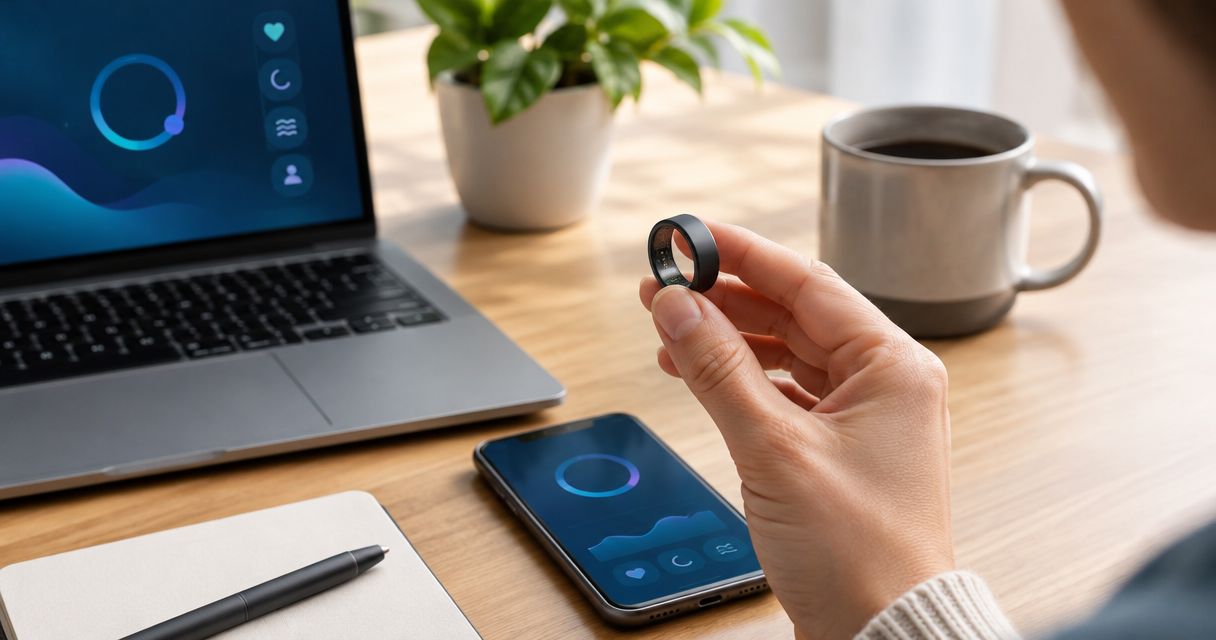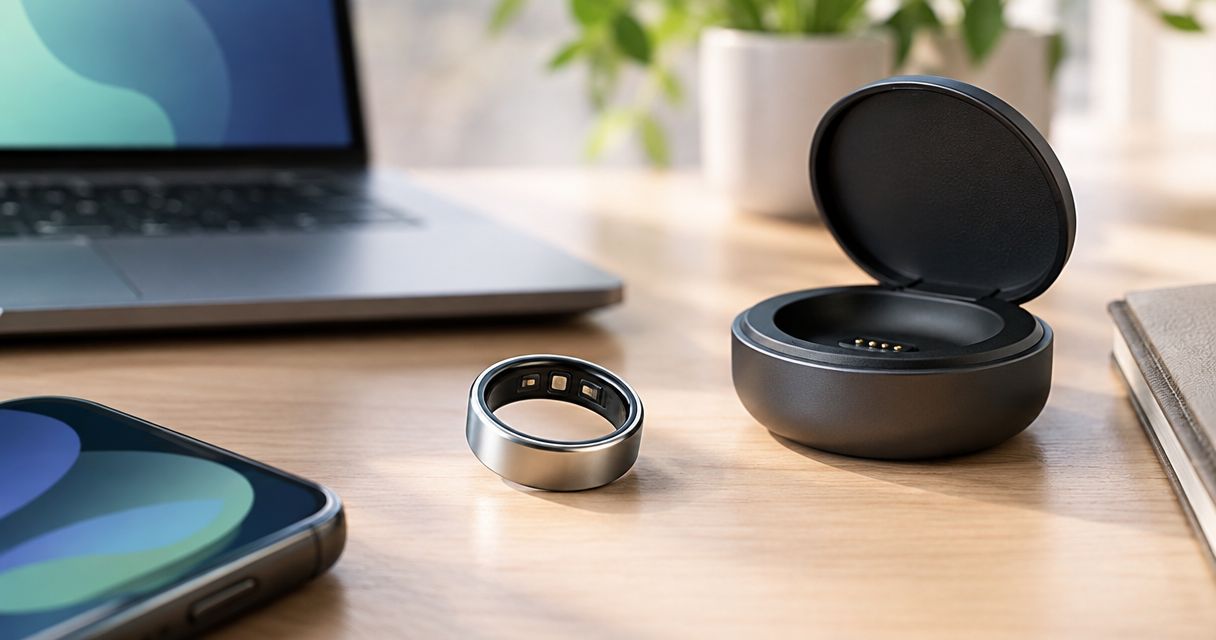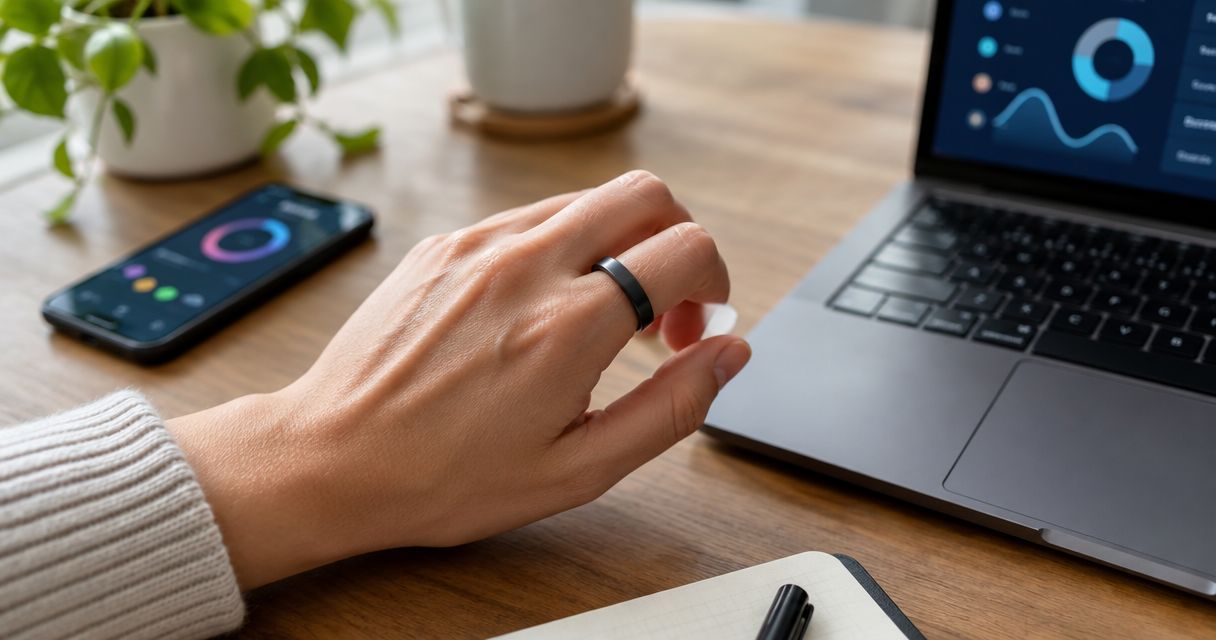

Night shift workers’ smart-ring tracking is wearable wellness monitoring aimed at understanding sleep and recovery around overnight work. Choosing a smart ring for night shift workers in 2026 means checking daytime-sleep handling, fit, and workplace safety before judging any headline score.
- Choose a smart ring for night shift workers by daytime-sleep handling, not a nighttime-only demonstration.
- Actxa Core Smart Ring is best for health-conscious shoppers seeking discreet wellness tracking.
- Start with a sleep diary, then check whether wearable records match your actual rest periods.
- Confirm workplace jewelry rules before choosing a ring over a wrist-worn tracker.
Why smart-ring tracking matters for night shift workers
An overnight schedule changes the question you need a wearable to answer. Instead of asking whether you slept last night, ask whether it captured your main daytime rest, any separate sleep periods, and the transitions between workdays and days off.
A calendar date is not a sleep schedule. A useful record must remain understandable when work crosses midnight and your longest rest starts after sunrise.
Actxa sells wearable wellness devices, including the Core Smart Ring. Actxa Core Smart Ring is best for health-conscious shoppers seeking discreet wellness tracking. For shift-work use, confirm its current sleep-recording behavior rather than treating that general positioning as proof of daytime-sleep support.
The goal is not to earn a better score. It is to build a record you can compare with how rested you feel, then identify questions worth discussing with a healthcare professional.
How to choose and use a smart ring around overnight work
Start with a sleep diary
Before buying hardware, make a simple record on paper or in a notes app. This gives you a reference that does not depend on an algorithm recognizing your schedule.
For your 2026 comparison, use a 14-day diary as a practical starting protocol, not a medical threshold. Extend it if that period does not include your usual mix of shifts and days off. Record actual rest rather than planned bedtime; interrupted daytime sleep deserves its own entry.
You do not need a detailed journal. A few consistent fields make it easier to spot a wearable record that misses a sleep block or assigns it to an unexpected date.
- Record each sleep start and wake time.
- Mark overnight shifts and days off.
- Note separate naps rather than merging them from memory.
- Describe how alert you feel after waking.
- Record when the wearable was off your body.
Check how daytime sleep appears
Use your diary to define what a successful sleep record looks like before comparing devices. Your main rest might begin in the morning, while a shorter rest happens before the next shift.
Ask to see the current app’s treatment of daytime sleep, separate rest periods, and sleep crossing a date boundary. A demonstration based only on conventional nighttime sleep does not answer those questions.
For a 2026 purchase, check the current device and app combination. A general claim about sleep tracking is not confirmation that every rest period will appear correctly, and recording a nap is different from including it in a daily summary.
- Ask whether daytime sleep is recorded automatically.
- Check whether separate sleep periods remain visible.
- Ask which date receives a sleep period crossing midnight.
- Check whether sleep timing can be corrected.
- Confirm which details appear in summaries versus individual sessions.
Test fit through your actual routine
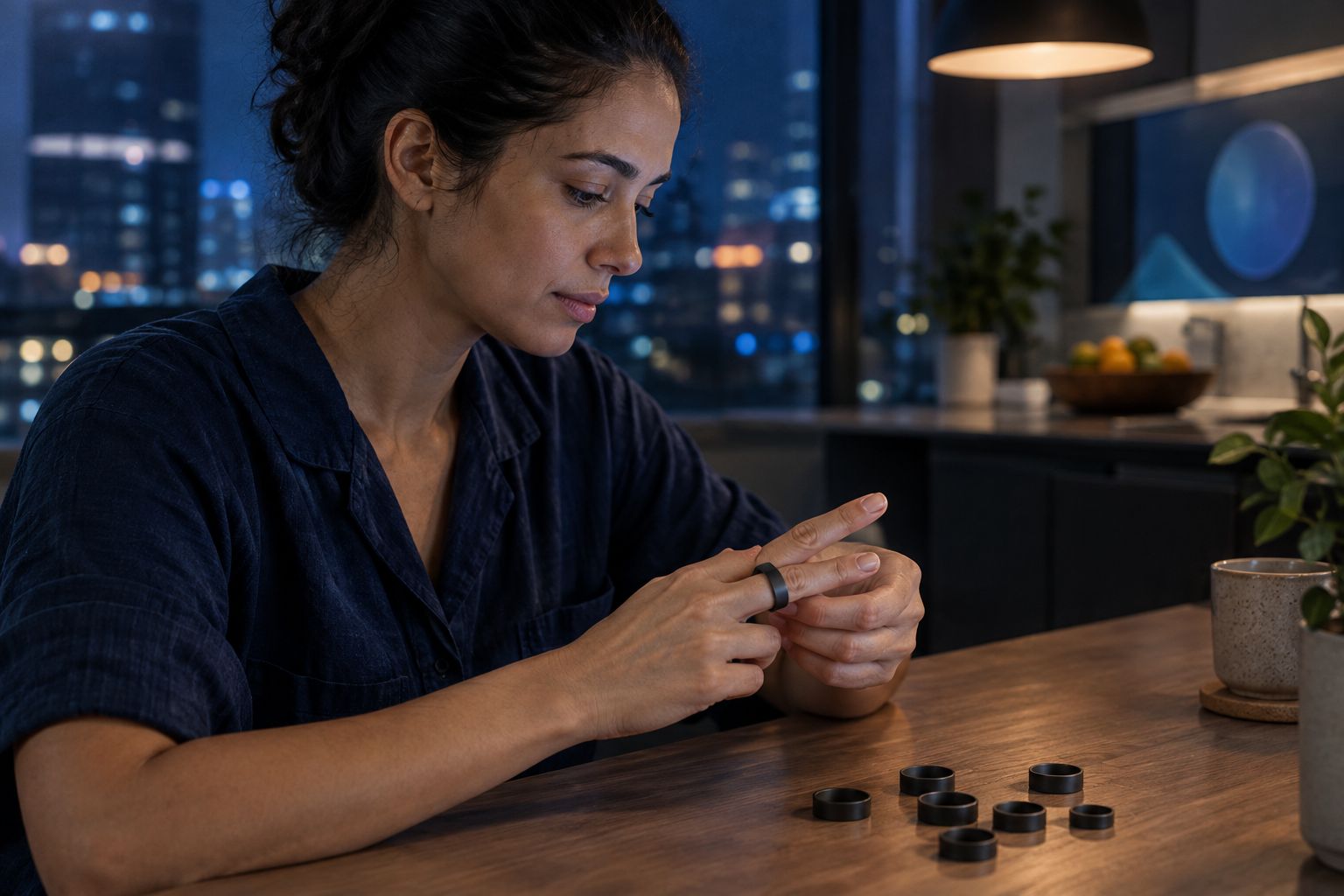
Start with the manufacturer’s sizing method rather than assuming your usual jewelry size transfers directly. Comfort while sitting still is only part of the decision; you also need to consider sleeping, handwashing, and ordinary hand movements.
The Core Smart Ring’s Ring Sizing Kit lets you try different sizes before confirming your final order. Use that opportunity to assess comfort rather than choosing the tightest size you can tolerate. The smart-ring sizing guide provides a related starting point.
Remove a ring that causes pain, numbness, or skin irritation. A wellness record is not a reason to keep wearing something uncomfortable.
- Follow the device’s own sizing instructions.
- Check comfort during your intended sleep position.
- Test normal hand movements with the sizing sample.
- Check that removal remains straightforward.
- Follow workplace and equipment-specific jewelry rules.
Choose the format your routine permits
A diary remains the simplest way to record sleep timing without wearing anything. Add a wearable when you want device-recorded wellness information alongside those notes, not because buying one is a prerequisite for understanding your schedule.
Actxa Core Smart Ring is designed for health-conscious users seeking a discreet wearable. Its limitation for this decision is that a discreet format alone does not establish daytime-sleep handling or workplace suitability. Confirm both before choosing it for overnight work.
Spark Band offers a screenless wrist-worn alternative whose stated features include sleep, recovery, fitness, and activity. A band changes where you wear the device; it does not automatically solve workplace restrictions or sleep-recording questions.
- Choose a diary when you want timing and context without hardware.
- Consider a ring when finger wear suits your routine.
- Consider a band when you prefer wrist wear.
- Check restrictions for each job task, not just your job title.
- Separate format preference from verified tracking functions.
Build charging around your main rest
Start by marking your main sleep opportunity on your schedule, then choose a charging window outside it. Do not assume that an evening charging habit suits a person preparing to work overnight.
For your 2026 setup, follow the device’s charging instructions and observe your actual use. Battery performance and charging requirements belong to the specific product; a category-wide promise is not a substitute.
If a record has a gap, check whether the wearable was charging or removed before interpreting that gap as unusual sleep. Make the routine easy enough to repeat during busy stretches of work.
- Identify a charging opportunity outside your main sleep.
- Follow the manufacturer’s charging instructions.
- Keep the charger somewhere you will remember it.
- Note charging gaps in your diary.
- Recheck the routine when your shift pattern changes.
Compare matching kinds of days
Read your diary first, then compare the wearable record with what actually happened. Keep workday sleep separate from days off when the schedules differ substantially.
A 24-hour view helps you account for separate rest periods without assuming one overnight block tells the whole story. It is a bookkeeping approach, not a diagnostic test. If you sleep in 2 separate blocks, inspect both entries before interpreting a daily total or score.
Keep the context labels consistent in 2026 so that later comparisons remain understandable. A change in your roster, device settings, or wearing routine deserves a note beside the data.
- Label workday sleep and days-off sleep separately.
- Check individual sessions before relying on a summary.
- Compare recorded timing with diary entries.
- Note device removal and settings changes.
- Keep subjective alertness alongside device estimates.
Set a boundary for health decisions
Begin with what you notice yourself: difficulty sleeping, excessive sleepiness, or trouble remaining alert. A wearable can organize observations, but its wellness summaries do not establish whether you are safe to drive or fit for a safety-critical task.
Bring your diary and relevant device records to a healthcare professional when sleep problems persist or interfere with daily functioning. Do not wait for a low score to take symptoms seriously.
If you feel sleepy while driving, pull over somewhere safe rather than using a favorable wearable score as reassurance. Your symptoms take priority over the dashboard.
- Record symptoms in plain language.
- Keep sleep timing available for a clinical discussion.
- Ask how your schedule affects the interpretation of symptoms.
- Follow professional advice rather than self-diagnosing from scores.
- Never use a wellness score as clearance to drive.
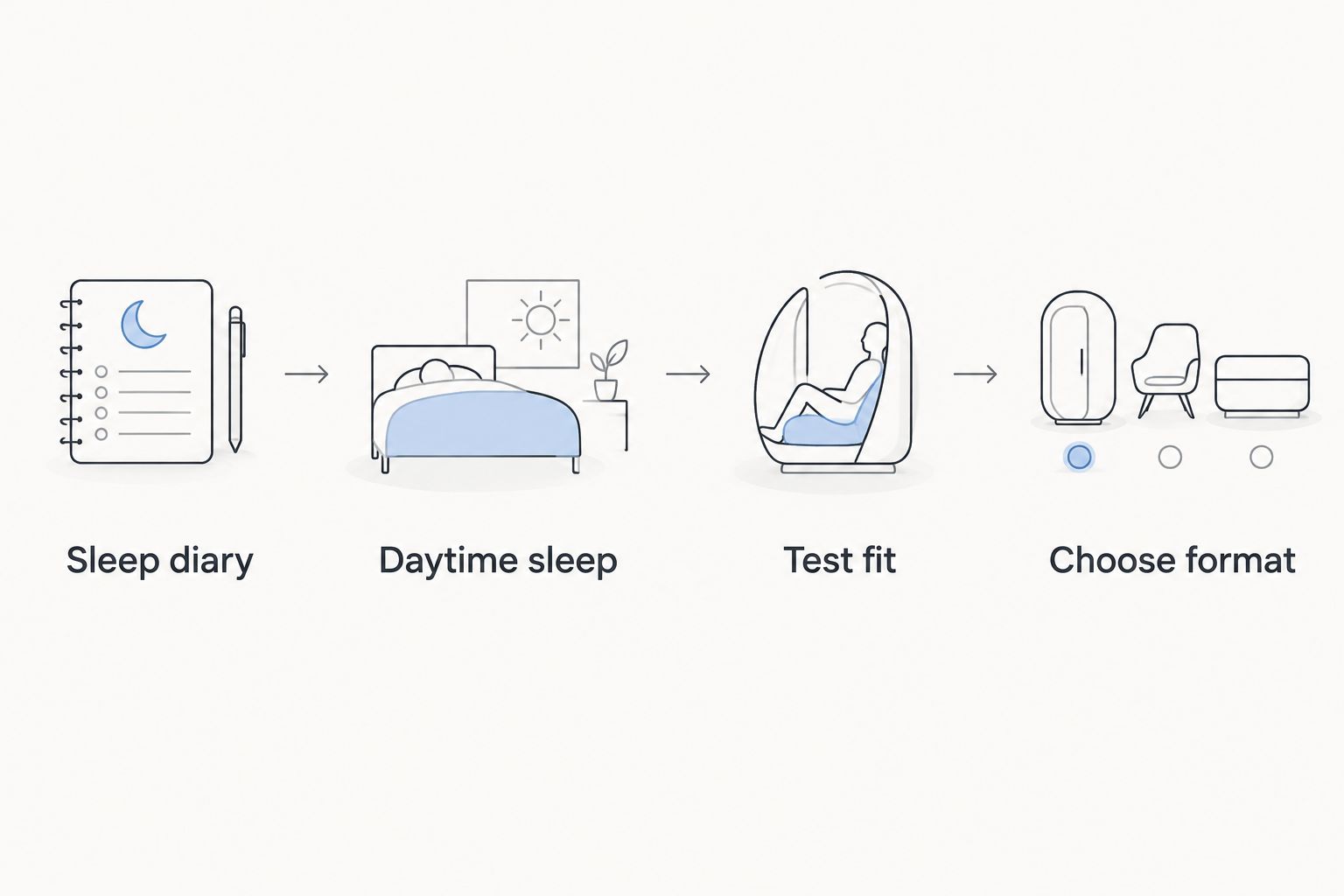
The selection process is straightforward: document your routine, check recording behavior, test comfort, and choose a format that fits your work. Keep that order; choosing hardware first can leave the most important questions unanswered.
Compare your tracking options
The best option depends on what you need to record and where you can wear a device. This 2026 comparison separates a product’s stated purpose from the checks that still matter for overnight work.
| Option | Best for | Main advantage | Key limitation |
|---|---|---|---|
| Paper or notes-app sleep diary | Recording shift context without wearing hardware | Captures your intended labels and personal observations | Requires manual entries; provides no sensor measurements |
| Core Smart Ring | Health-conscious shoppers wanting discreet wellness tracking | Ring-format wearable designed for health tracking | Confirm daytime-sleep handling and workplace suitability before choosing |
| Spark Band | Shoppers preferring a screenless wrist-worn tracker | Stated features include sleep, recovery, fitness, and activity | Wrist wear still needs a comfort and workplace check |
| Diary plus wearable | Comparing personal observations with device records | Keeps schedule context beside automated estimates | Requires maintaining and reviewing both records |
Choose the format you can use consistently and safely. Neither a ring nor a band is the right answer when your work rules prohibit it during the periods you intend to track.
If you are considering the ring format, the Core Smart Ring and its sizing kit address different parts of the purchase: the wearable itself and the fit check beforehand. The sizing kit is not a tracker.


Common mistakes night shift workers make
Treating midnight as the end of the sleep story
A shift crossing midnight and a morning sleep period can make date-based summaries confusing. Check the actual session times before deciding that a day’s record is incomplete, unusually short, or unusually long.
Assuming all sleep tracking handles naps identically
Recording a separate rest period, displaying it, and including it in a summary are different functions. Ask about each one instead of accepting a general sleep-tracking label as the complete answer.
Comparing a shift stretch with an unrelated day off
A workday with daytime rest and a day off with nighttime rest have different context. Label those conditions before interpreting a change as an improvement or decline in your routine.
Buying before checking jewelry restrictions
A ring that feels comfortable at home can still be unsuitable for your work tasks. Check employer rules and equipment guidance first; do not assume permission to wear ordinary jewelry also covers a smart ring.
Letting the score overrule how you feel
A favorable summary does not cancel persistent sleepiness or difficulty functioning. Use the device to organize questions, not to dismiss symptoms or justify driving when you feel drowsy.
FAQ
What's the best smart ring for night shift workers?
The best smart ring for night shift workers is one whose current app handles your daytime sleep clearly and whose fit suits your routine. Confirm separate sleep periods, date assignment, comfort, and workplace rules before choosing a model.
Can a smart ring track sleep during the day?
Daytime-sleep support is a device-and-app feature you need to confirm for the specific model. Ask how daytime sessions are detected, displayed, and included in daily summaries.
Is Actxa Core Smart Ring suitable for overnight workers?
Actxa Core Smart Ring is a discreet wellness wearable, but overnight-work suitability requires checking its current daytime-sleep behavior and your workplace rules. General health-tracking positioning does not establish how a particular shift pattern will appear in the app.
Should I choose a ring or a band for night shifts?
Choose the format that your work permits and that feels comfortable during your main rest. Then compare the specific sleep-recording functions rather than assuming ring or wrist placement determines tracking quality.
What should I do if I sleep in separate blocks?
Record each sleep block separately in your diary and check whether the wearable shows each session. Inspect the session times before relying on a daily total or recovery summary.
When should a night shift worker charge a smart ring?
Charge outside your main sleep opportunity, following the device's instructions. Choose a repeatable window based on your actual schedule rather than copying an evening routine designed around nighttime sleep.
Can a smart ring diagnose shift work sleep disorder?
A consumer wellness ring cannot establish a diagnosis of shift work sleep disorder. A healthcare professional assesses your symptoms and sleep history; your diary and wearable records can support that discussion.
One last thing
Before comparing another feature, write down the sleep period your next wearable must capture correctly. Include its start time, end time, and any separate rest before work.
Make that real schedule your buying test. A polished nighttime demonstration is not an answer to a daytime-sleep question.