
A smart ring is not automatically HSA or FSA eligible in 2026: the expense must qualify as medical care under federal tax rules, rather than merely support general wellness. A health-tracking label, a prescription, or an accepted benefits card does not by itself establish that your purchase qualifies.
- An HSA eligible smart ring must meet medical-expense rules; general wellness tracking alone does not establish eligibility.
- HSA and FSA purchases require supporting records, but the reimbursement process differs between accounts.
- A letter of medical necessity supports a claim; it does not automatically make an otherwise ineligible expense eligible.
- Actxa Core Smart Ring is best for health-conscious buyers seeking a discreet wellness wearable, not proof of benefits eligibility.
Is a smart ring HSA or FSA eligible?
A smart ring qualifies only when the expense meets the applicable medical-care requirements. The IRS distinguishes expenses primarily for medical care from expenses that benefit general health. Buying a ring to follow everyday activity or general wellness does not, by itself, establish a qualified medical expense.
For your 2026 purchase, separate the product's capabilities from its tax treatment. A device can provide useful health information without every purchase of that device qualifying for tax-advantaged payment.
IRS Publication 502 explains the distinction between medical care and general-health expenses. IRS Publication 969 explains HSA distributions and health FSA rules. These are the federal starting points; a product advertisement is not a substitute.
If you are considering the Actxa store, evaluate the wearable on its stated purpose and confirm benefits eligibility separately. Do not treat a store listing as a determination about your personal tax situation.
Check eligibility before you buy
- Identify your account. Confirm whether you are using an HSA or a health FSA. Their payment, substantiation, and timing rules differ.
- Identify the exact expense. Record the ring model and distinguish the device from any separate accessory or service.
- Explain the medical purpose. Establish whether the purchase is primarily for qualifying medical care or for general wellness.
- Ask about documentation. For an FSA, ask the administrator what the claim requires. For an HSA, establish the tax basis for the expense and retain supporting records.
- Check the relevant dates. Confirm that the expense falls within the account's applicable eligibility period.
- Save the decision and receipt. Keep any written guidance alongside the itemized purchase record and medical documentation.
The key question is not simply whether a ring tracks health. It is whether your particular expense qualifies under the rules governing your account.
Why this matters
An HSA eligible smart ring search combines two different decisions: whether a wearable suits your needs and whether you can use tax-advantaged funds for it. A good product fit does not establish a qualified medical expense.
That distinction matters before payment. An FSA claim can be denied when it lacks required substantiation, while an HSA account holder remains responsible for the tax treatment of distributions. A successful card transaction does not resolve either issue.
For a 2026 purchase, confirm the eligibility basis before treating the ring as reimbursable. If eligibility remains unresolved, make the purchase decision on the assumption that you will pay personally.
HSA: You are responsible for qualifying distributions
An HSA lets you take tax-free distributions for qualified medical expenses, subject to the applicable rules. The account holder must retain records showing that a distribution paid an eligible expense and was not reimbursed elsewhere.
Best for: An eligible HSA account holder with a documented qualified medical expense.
The advantage is control over when you reimburse yourself for an eligible expense. The limitation is that access to account funds does not mean every withdrawal is tax-free.
For a smart ring, keep evidence explaining both what you bought and why the expense qualifies. A receipt proves the transaction; it does not necessarily establish the medical purpose.
Also check when your HSA was established. Expenses incurred before the HSA was established generally do not qualify for tax-free reimbursement from that account. This is different from checking whether the account currently has enough money to cover the purchase.
FSA: Your claim must satisfy the plan's requirements
A health FSA reimburses eligible medical expenses under the employer's plan. Its administrator applies the plan's substantiation and claims procedures.
Best for: A health FSA participant whose expense qualifies and meets the plan's timing and documentation requirements.
The advantage is a defined claims process through the administrator. The limitation is that a potentially eligible expense still needs the required documentation, and the plan's deadlines matter.
Ask the administrator about the exact ring and intended use before buying. Keep the response, but read its conditions carefully: a general explanation of medical-expense rules is not the same as approval of your specific claim.
For 2026 claims, check your own plan documents rather than relying on another employer's benefits guide. Carryover provisions, grace periods, and submission deadlines are not interchangeable.
HSA versus FSA for a smart ring purchase
| Question | HSA | Health FSA |
|---|---|---|
| What establishes eligibility? | Qualified medical-expense rules | Medical-expense rules and applicable plan requirements |
| Who handles substantiation? | You retain records supporting the distribution | The administrator requires claim substantiation |
| What is the practical advantage? | Control over reimbursement timing for an eligible expense | A defined reimbursement process |
| What is the main limitation? | You remain responsible for correct tax treatment | Documentation and plan deadlines govern the claim |
| Does card acceptance prove eligibility? | No | No |
Neither account makes a general-wellness purchase eligible simply because the device collects health-related information.
Why smart ring eligibility varies
The relevant differences concern the expense and its purpose, not just the device's features.
- Medical purpose: An expense primarily for diagnosis, treatment, mitigation, or prevention of disease differs from one primarily for general health.
- Product and use: Evidence must connect the particular device and its intended use to the claimed medical purpose.
- Supporting documentation: A receipt identifies the purchase; additional records establish why it qualifies when that is not otherwise clear.
- Account requirements: HSA recordkeeping and FSA claim substantiation follow different processes.
- Expense timing: HSA establishment dates and FSA coverage periods affect whether an otherwise qualifying expense can be reimbursed.
- Separate charges: An accessory or ongoing service requires its own eligibility analysis rather than automatically inheriting the device's treatment.
A medical reason is more specific than a personal health goal. Wanting better sleep or greater awareness of your activity does not, by itself, establish that a ring is a qualified medical expense.
Start with the medical purpose, then evaluate the purchase—not the other way around. This keeps a desirable wellness feature from becoming an unsupported tax claim.
Does a letter of medical necessity make a smart ring eligible?
A letter of medical necessity supports the medical purpose of an expense; it does not automatically make every smart ring purchase eligible. The underlying expense must still satisfy the applicable rules.
Ask your treating clinician whether the device has a specific role in your care. If the clinician supports its use, ask the FSA administrator what documentation is required before requesting a particular form or letter.
Useful documentation explains the connection between the medical condition, the device, and its intended role. A generic statement that tracking health is beneficial does not establish that connection.
Do not assume a seller's documentation service guarantees reimbursement. A letter is evidence, not a blanket exemption from medical-expense rules.
Can I use an HSA or FSA card at checkout?
An HSA or FSA card transaction does not prove that a smart ring is an eligible medical expense. Payment processing and expense qualification are separate questions.
If the transaction succeeds, retain the same supporting records you would keep for a reimbursement claim. If it fails, ask the account provider or administrator about the payment issue without treating the decline as a complete eligibility determination.
Personal payment followed by reimbursement is also not a workaround for an ineligible expense. The underlying purchase must qualify regardless of which card you use.
Before checkout, distinguish these three questions:
- Eligibility: Does the expense qualify under medical-expense rules?
- Payment: Does the merchant accept the account's card?
- Reimbursement: Does the purchase meet the account's documentation and timing requirements?
An answer to one question does not automatically answer the others.
What records should I keep for a smart ring claim?
Keep records that establish the purchase, its qualifying purpose, and its reimbursement history. For 2026 purchases, organize them together rather than relying on an order confirmation alone.
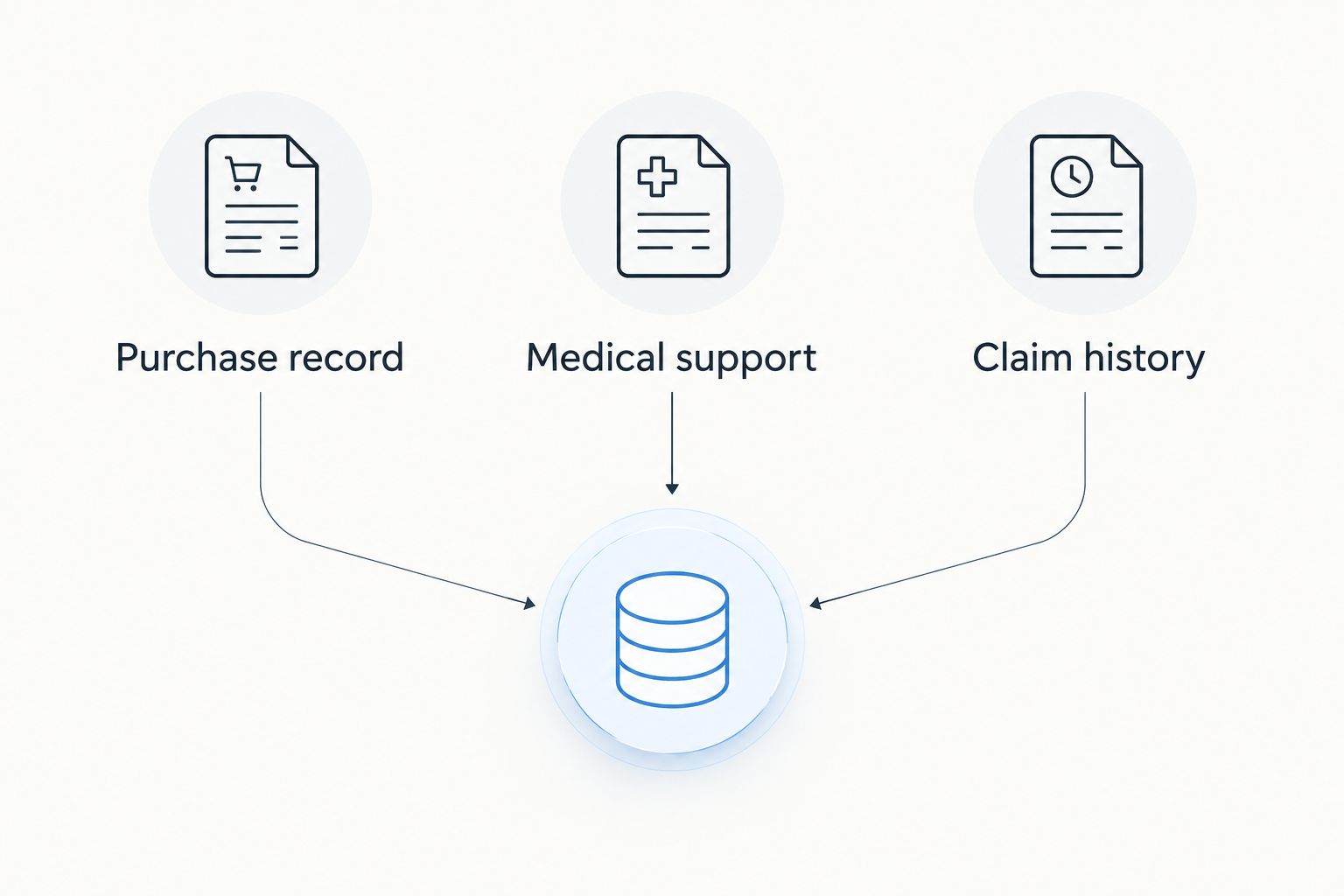
Use three record categories:
- Purchase record: An itemized receipt identifying the seller, device, purchase date, and amount paid.
- Medical support: Relevant documentation explaining the qualifying medical purpose, where required to establish eligibility.
- Claim history: The submitted claim, administrator correspondence, reimbursement decision, and any other reimbursement records.
These categories answer different questions. The receipt shows what you bought, medical support explains the claimed purpose, and claim history helps show whether another source already reimbursed the expense.
Avoid claiming the same expense through multiple reimbursement sources. Also separate the device from other charges on the order so that each claimed expense has a clear basis.
If your FSA administrator requests more information, respond with the requested records rather than another copy of the product's marketing description. Product benefits and claim substantiation serve different purposes.
Where does the Core Smart Ring fit?
Actxa Core Smart Ring is best for health-conscious buyers seeking a discreet wellness wearable. That product fit is separate from HSA or FSA eligibility.
Its stated purpose supports considering it as a health-tracking wearable. It does not establish that your purchase qualifies for reimbursement, so do not choose it on the assumption that benefits funds will cover it.
The practical advantage is its discreet ring format for wellness tracking. The purchasing limitation is that eligibility still requires a separate assessment of your expense and intended use. Compare the wearable against your actual tracking needs before considering the account you hope to use.
FAQ
What's the best way to check whether a smart ring is HSA eligible?
Check whether your specific purchase qualifies as a medical expense, not just whether the ring tracks health. Establish the medical purpose, review IRS guidance, and retain documentation supporting any HSA distribution.
Can I buy a smart ring with my FSA in 2026?
You can use a health FSA for a smart ring only when the expense qualifies and satisfies your plan's requirements. Ask the administrator about the exact device, intended use, supporting documents, and applicable deadlines before purchasing.
Is the Actxa Core Smart Ring automatically HSA or FSA eligible?
Do not assume the Actxa Core Smart Ring is automatically HSA or FSA eligible because it is a wellness wearable. Your specific expense must meet medical-expense rules and any applicable FSA requirements.
Does a doctor's prescription guarantee smart ring reimbursement?
A doctor's prescription does not automatically guarantee smart ring reimbursement. The underlying expense must qualify, and an FSA claim must satisfy the plan's documentation requirements.
Does an accepted benefits card mean my ring is eligible?
An accepted benefits card does not prove that your ring qualifies as a medical expense. Keep the receipt and supporting documentation even when checkout succeeds.
Can I reimburse myself if I paid with a personal card?
Personal payment does not prevent reimbursement of an otherwise eligible expense. HSA establishment rules or FSA coverage periods, documentation requirements, and applicable claim deadlines still matter.
Are smart ring accessories automatically covered too?
Smart ring accessories are not automatically eligible merely because they accompany a device. Evaluate each separate expense and confirm what documentation supports its claimed medical purpose.
One last thing
The most useful confirmation before buying is about your expense—not the product category. Ask whether the exact device, intended medical use, purchase timing, and supporting records satisfy the applicable requirements.
Keep that response with your receipt. For your 2026 purchase, this creates a clearer record than a screenshot saying that smart rings support health. This guide provides general information, not individualized tax or medical advice.